
Intro
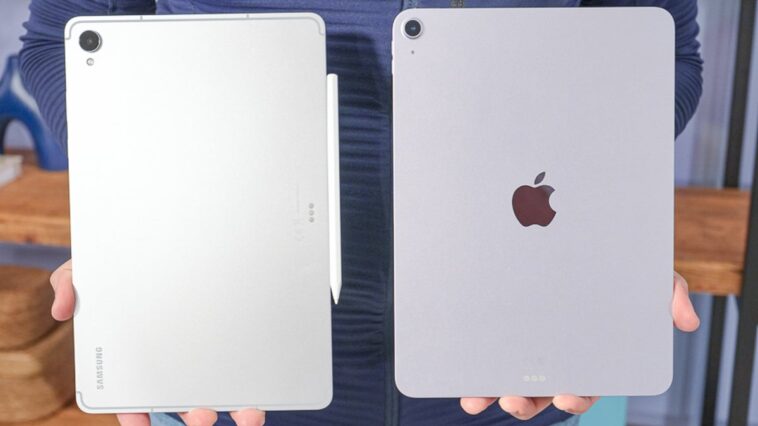
Samsung has officially revived its compact flagship tablet line with the Galaxy Tab S11. After skipping the base model in the Tab S10 generation, the company is back with an 11-inch tablet that takes on Apple’s iPad Air M3.
Samsung’s out with its brightest 11-inch AMOLED tablet yet, complete with a redesigned S Pen in the box, but Apple offers the super-powerful iPad Air for $200 less. Which one offers better value then? Let’s break it down.
Samsung Galaxy Tab S11 vs Apple iPad Air M3 differences explained:Samsung Galaxy Tab S11Apple iPad Air 11″ M3MediaTek Dimensity 9400 chip, 3nmApple M3 chip, 3nm11″ Dynamic AMOLED 2X, 2560 × 1600, 120Hz, 1,600 nits11″ Liquid Retina IPS LCD, 2360 × 1640, 60Hz, ~500 nits12 GB of RAM on board8 GB of memory 128GB, 256GB, 512GB storage + microSD (up to 2TB)128GB, 256GB, 512GB, and 1TB storage versions13 MP rear camera12 MP rear camera8,400 mAh battery 7,606 mAh battery45W wired charging20W wired chargingAndroid 16, One UI 8, Galaxy AI, 7 years of updatesiPadOS 18 (iPadOS 26 soon), Apple Intelligence, ~7 years of updatesRedesigned S Pen includedApple Pencil (USB-C / Pro), sold separatelyFrom $799.99 (Wi-Fi only in US)From $599 (11-inch)
Design and Display
Both have premium build quality, but very different screensThe Galaxy Tab S11 sticks the flat-side look, slim uniform bezels, Armor Aluminum frame, and IP68 rating. It measures 253.8 × 165.3 × 5.5 mm and weighs 482 g.
The iPad Air M3 is thinner at 6.1 mm and lighter at 460 g, but it has noticeably thicker bezels and lacks water resistance.
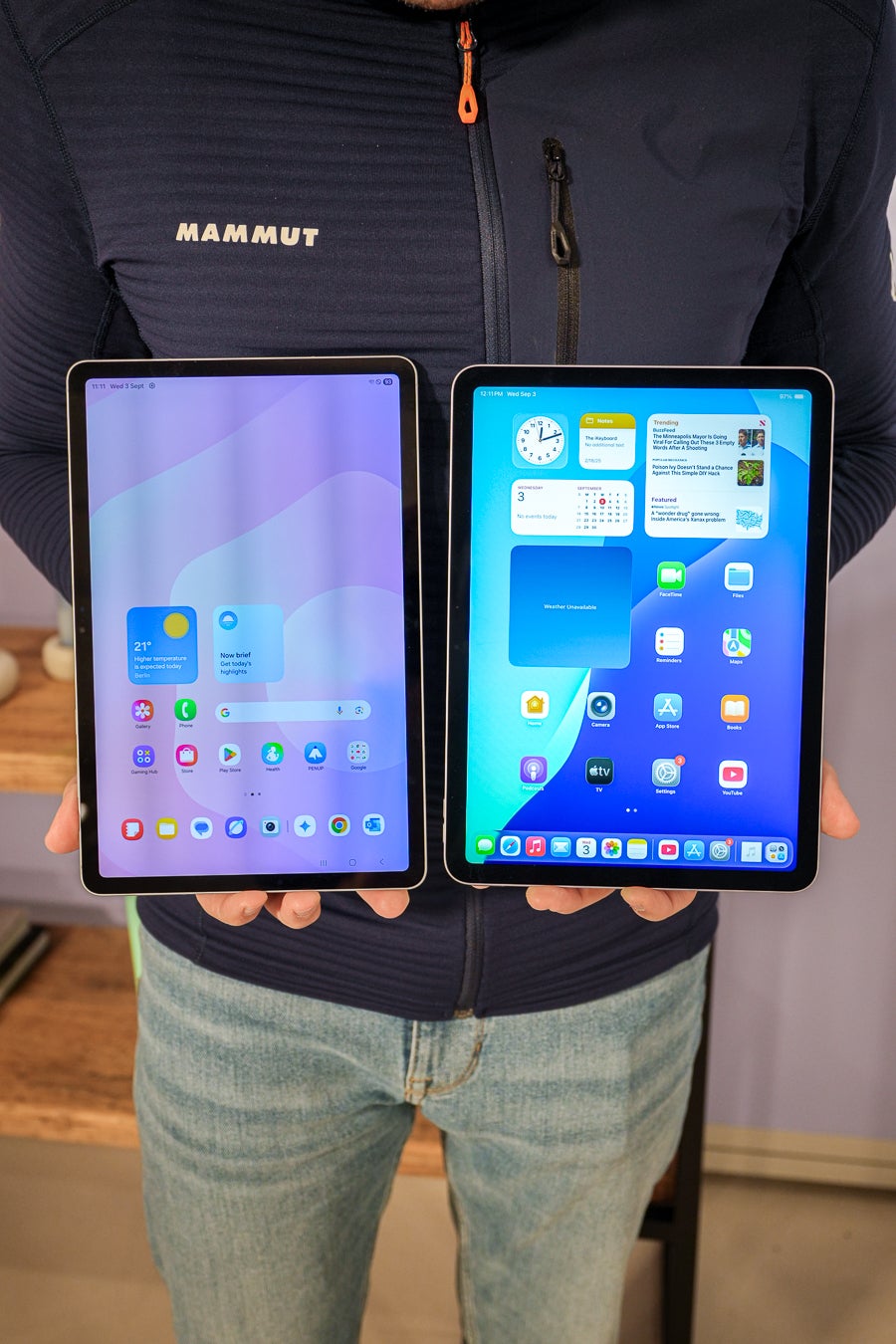
Image by PhoneArena
But the screen is where Samsung dominates. The Tab S11’s 11-inch AMOLED reaches 1,600 nits peak brightness and has a 60-120Hz refresh rate, making it smooth and vibrant. But despite the fact that this is arguably the most important part of a tablet, the iPad Air M3 rocks a rather outdated 11-inch IPS LCD panel that’s limited to 60Hz and about 500 nits of peak brightness. All of which bring down the user experience that it can deliver.
The Tab S11 comes in Gray and Silver, while the iPad Air offers more playful shades — Space Gray, Starlight, Purple, and Blue.
Keyboard and Stylus
Samsung still includes the S Pen in the box, which now has a cone-shaped tip and a hexagonal body for a more pencil-like feel, making the stylus more comfortable.
The iPad Air M3, on the other hand, supports two separate styluses, but both are sold separately:
Apple Pencil (USB-C) — $79: good for notes and simple sketching, but without pressure sensitivity.Apple Pencil Pro — $129: comes with squeeze gestures, barrel rotation, haptics, and full pressure/tilt sensitivity. It can be charged magnetically to the iPad, snapping right onto it.
That means while the Galaxy Tab S11 gives you everything you need for creative or productivity work out of the box, iPad Air buyers need to add at least $79 — and realistically $129 — to unlock the same kind of stylus experience.
Performance & Benchmarks
M3 vs. DimensityThe iPad Air’s Apple M3 chip is still unmatched for raw power — it’s essentially a MacBook chip inside a tablet. Heavy creative apps like Final Cut Pro or Logic Pro run with ease, though it is somewhat of an overkill as only a few apps are able to utilize it properly.The Galaxy Tab S11’s MediaTek Dimensity 9400+ (3nm) is no slouch either. In Geekbench 6, it scores 2,776 single-core (vs 3,017) / 8,811 multi-core (vs 11,728), with 6,313 (vs 5,177) in 3DMark Wild Life Extreme. That puts it firmly in flagship Android territory.
Memory and storage are also different between the two. Samsung ships 12 GB of RAM standard across all models, plus microSD expansion up to 2 TB. Apple offers 8 GB of RAM and fixed storage up to 1 TB, but no expansion.
Software
The Galaxy Tab S11 launches with Android 16 and One UI 8, backed by seven years of updates. Samsung adds DeX Extended Mode, which finally treats an external display as a second screen (just like the iPad), and Galaxy AI features like Writing Assist, Drawing Assist, and Gemini Live.
The iPad Air M3 runs iPadOS 18, moving toward iPadOS 26 with the new Liquid Glass redesign. It also supports Apple Intelligence, Apple’s new AI suite that is still severely behind the competition. Apple generally supports iPads for 6–7 years as well.
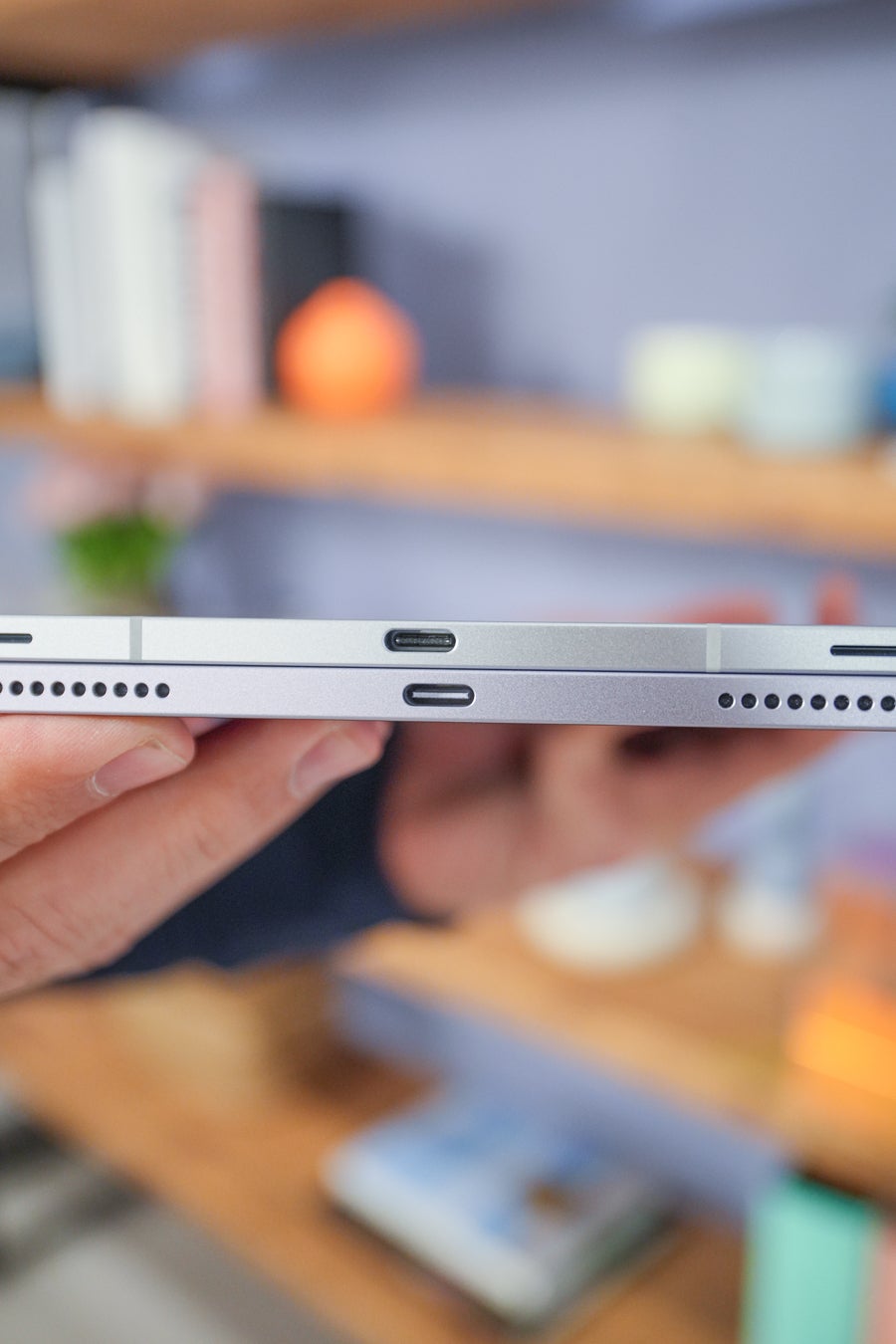
Image by PhoneArena
The Tab S11 carries an 8,400 mAh battery with 45W wired charging. No adapter is included in the box.
The iPad Air M3 has a smaller 7,606 mAh battery with 20W charging, meaning it will recharge up significantly slower. Both should last a full day, but Samsung has the advantage in charging speed, which is a major plus when it comes to tablet-sized batteries.
Camera
Nothing too spectacular
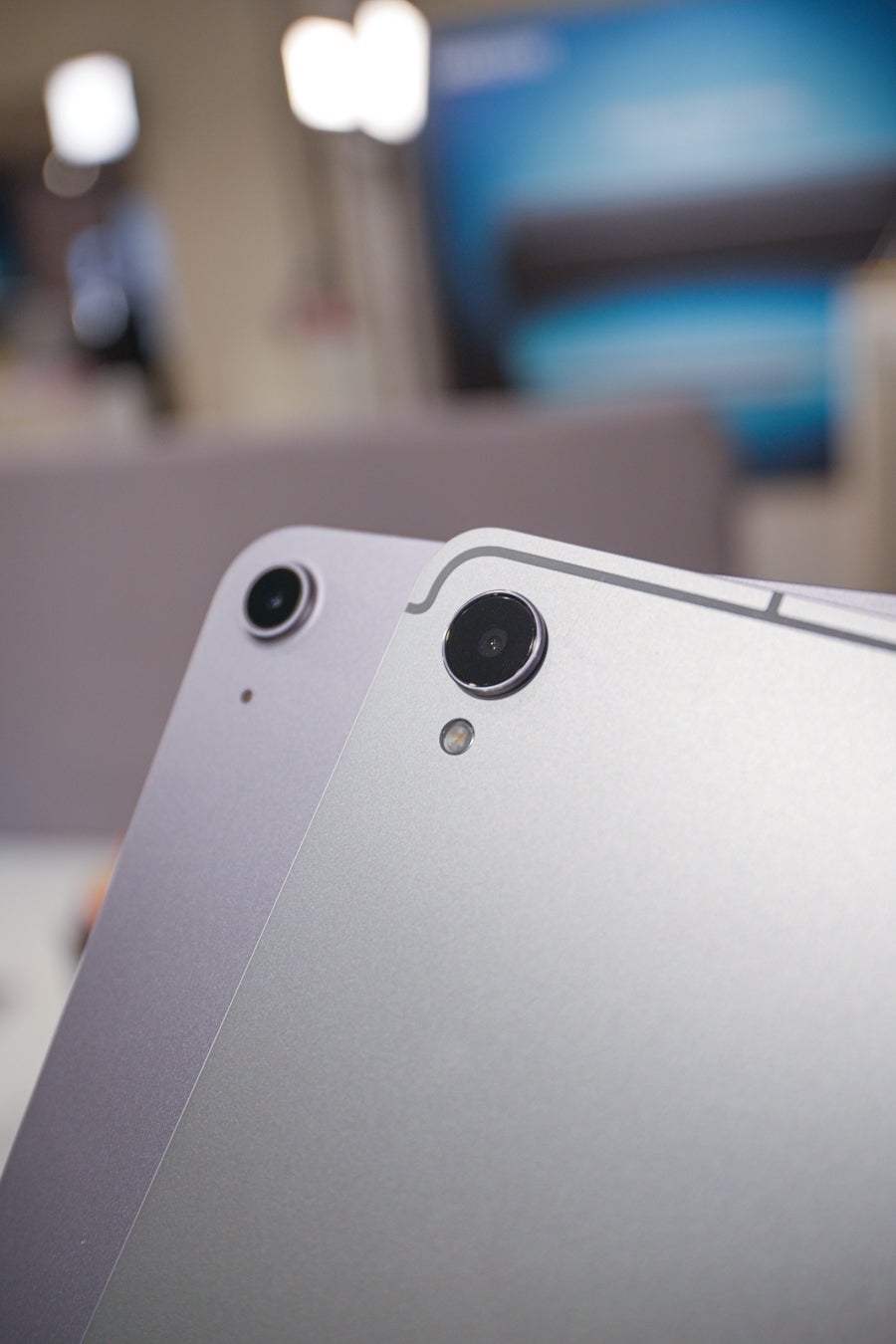
Image by PhoneArena
Neither tablet is great for photography. The Tab S11 has a 13 MP rear camera and a 12 MP ultrawide front camera with reliable auto-exposure for video calls. The iPad Air M3 sports a 12 MP rear and 12M P ultrawide front as well. Both will do just fine for FaceTime, Zoom, or quick snaps.
Which one should you buy?
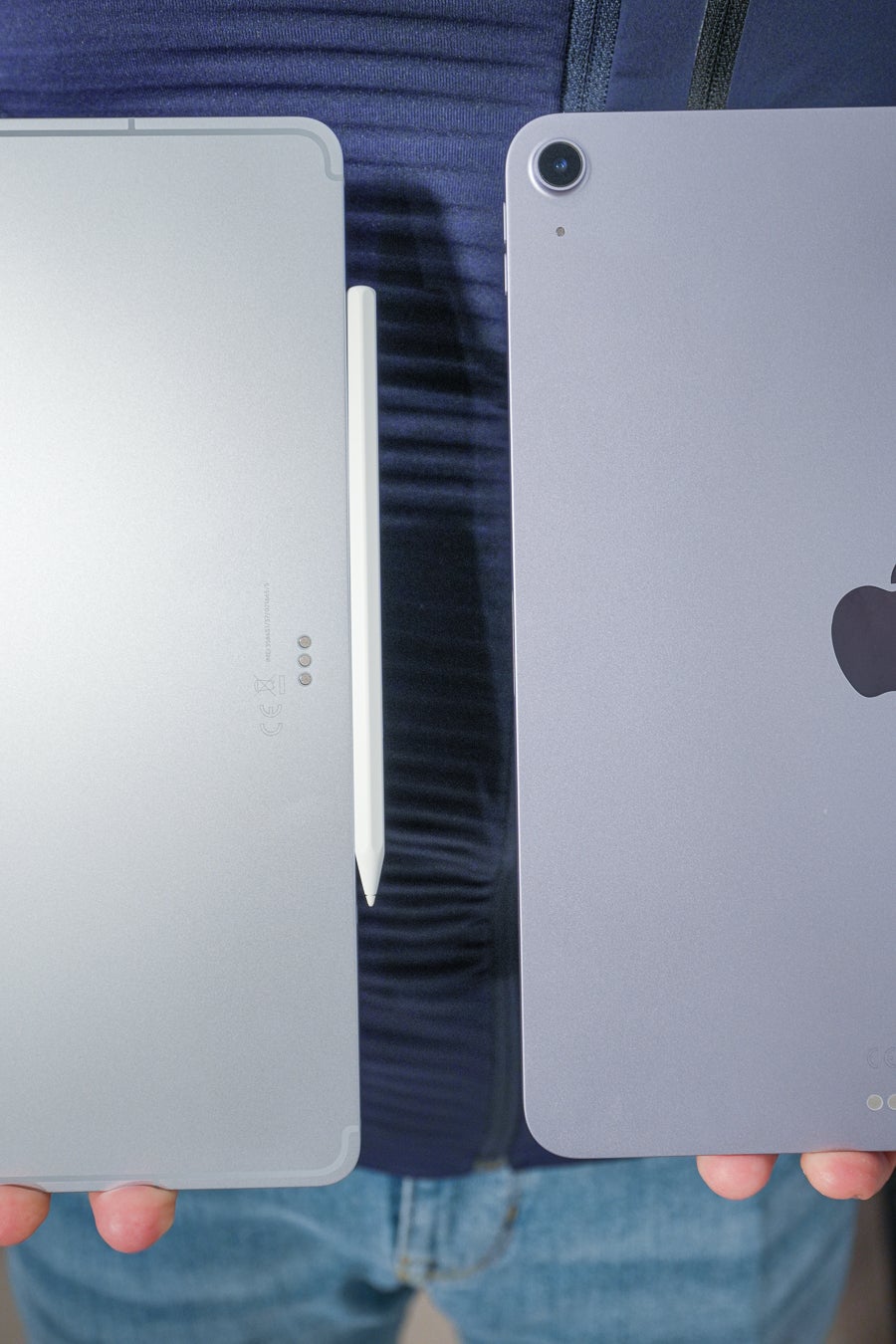
Image by PhoneArena
The iPad Air M3 wins on raw performance and ecosystem perks. If you’re already invested in Apple gear and want the power of the M3 chip, it’s the easy choice — just be ready to spend extra on the Pencil.But the Galaxy Tab S11 comes with two major benefits that define a great tablet: screen quality and a stylus. The smoother and brighter screen elevates every experience on the tablet, especially when it comes to movies or other video content. The included S Pen immediately lets you use the tablet in creative ways. It’s also awesome to have expandable storage, especially if you don’t want to spend too much of your cash upfront for more on-device storage.
For most people who value display quality and productivity, the Tab S11 feels like the more balanced package. The iPad Air M3 is the better fit only if you specifically need Apple apps or that M3 muscle.
Read the latest from Peter Kostadinov




GIPHY App Key not set. Please check settings