
Plastic in the ocean is a problem that is often not even seen. A lot of rubbish floats below the surface or lies deep on the seabed. People can hardly work there – but robots can!
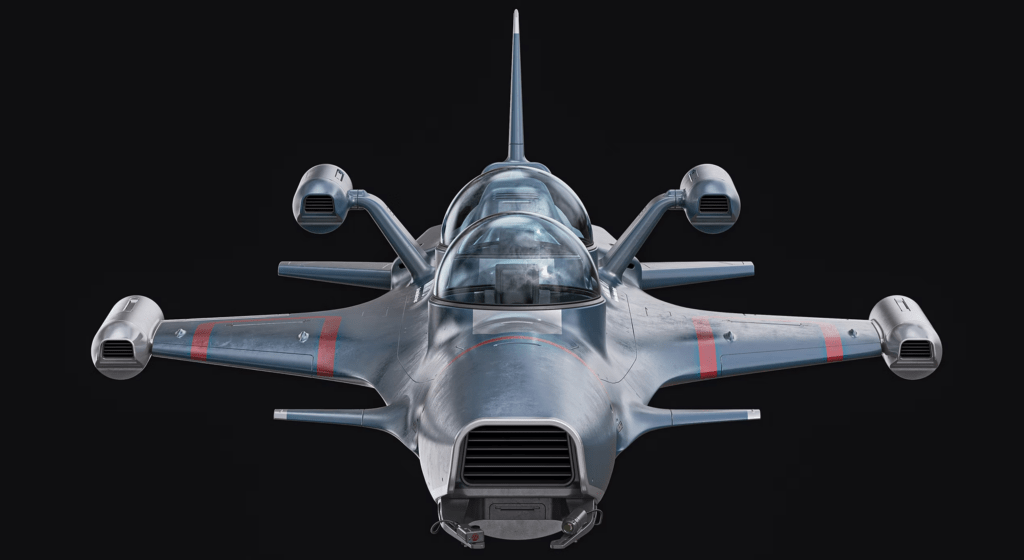
At Ocean Quest International, a special concept plays an important role: the wing glider. It’s not a toy, but a smart underwater robot that helps detect and better understand plastic in the sea.
 Those: https://www.ocean-robotics.ai/kopie-von-drones

🤔 Why do you need robots against plastic?
Millions of tons of plastic end up in the ocean every year. There it slowly breaks down into microplastics that fish and other marine animals ingest. The problem with this:
The garbage is often very deep. Large areas are inaccessible to people. Diving is dangerous and limited in time
This is where modern robotics comes into play.
🤖 What exactly is the “Wing Glider”?
The Wing Glider is an autonomous underwater robot, i.e. a robot that can glide through the sea independently. Ocean Quest uses this term for a research and development project, not for a finished series product.
You can imagine the Wing Glider like an intelligent underwater scout:
It moves through the water to save energy. It can stay in the sea for a long time. It collects important data about pollution
🧠 How does the Wing Glider recognize plastic?
👀 Cameras & Sensors
The robot is equipped with cameras, sonar and environmental sensors. This allows him to “see” what is happening around him – even in cloudy water.
🤖 Artificial intelligence
An AI helps the wing glider recognize whether something is plastic or part of nature. This is important because many things look similar underwater.
📊 Data instead of flying blind
The robot collects precise information about
where plastic is located, how much there is, at what depth it occurs
This data helps researchers to clean up in a targeted manner.
🌊 Does the Wing Glider also collect plastic?
The Wing Glider is primarily a search and analysis robot. His main job is:
Finding garbage spots, documenting them, and preparing clean-up operations
In the future, such robots could also be combined with gripper arms or collection systems. So Ocean Quest thinks long-term – step by step.
🌍 Why is this so important?
Without accurate data, no one knows where to start cleaning. The Wing Glider helps to make the invisible plastic hotspots in the sea visible.
This shows:
Robotics can support environmental protection AI helps to better understand nature Technology is not just cool – it can do good 🌱
✅ Conclusion
Ocean Quest International’s Wing Glider is not a science fiction robot, but a realistic and important future project. As an autonomous underwater robot, it helps to detect and analyze plastic in the sea and prepare targeted solutions. A great example of how robotics and environmental protection can work together.
🦊 FuxFun – Did you know that…?
… over 90% of the plastic waste in the ocean does not float on the surface, but lies underneath or on the seabed? That’s exactly why underwater robots like the Wing Glider are so important! 😲
🔍 For professionals
If you want to go deeper:
📘 Book recommendation
Would you like to find out more about robots, AI and exciting technology?
👉 “Robots & AI” from the SchlauFUX series from Kosmos Verlag
https://www.kosmos.de/de/kosmos-schlaufux-roboter-und-ki_1182437_9783440182437
I like it:
Like Loading…
Similar posts




GIPHY App Key not set. Please check settings