
Key Points
— Itaú Unibanco, Santander Brasil, and Bradesco closed 938 branches in 2025 — topping the 800+ shut in 2024 — and ended the year with 4,878 locations as all three accelerate their shift to digital channels.

— Itaú invested R$11.7 billion in technology (up 18.2%) and migrated 15 million customers to a single app; Santander consolidated services in its One App platform; Bradesco now originates 44% of its loans digitally.
— Brazil’s total branch network has shrunk by a third since 2015 — from 23,154 to about 15,500 — as fintechs like Nubank capture low-income segments and force traditional banks to compete on cost.
The remaining branch visits, Santander’s CEO said, are increasingly just trips to the ATM. That tells you everything about where Brazilian banking is headed.
Brazil’s three largest private banks eliminated 938 branches in 2025, accelerating a trend that saw over 800 closures the prior year. Itaú led with 319 shutdowns, ending at 1,953 locations.
Santander dropped below 1,000 for the first time, finishing at 916 after cutting 323 branches plus 256 smaller service posts. Bradesco closed 296, bringing its network to 2,009. Together, the trio ended 2025 with 4,878 branches.
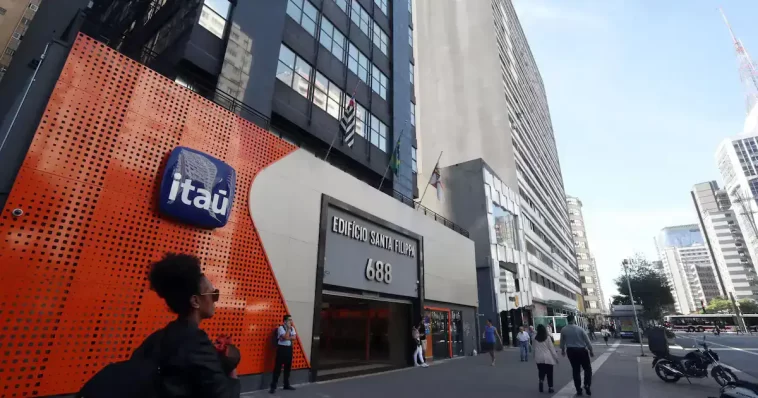
 Brazil’s Big Three Banks Shut 938 Branches in One Year. (Photo Internet reproduction)
The closures are driven by fintech competition that has reshaped how Brazilians access banking. Digital players like Nubank have forced legacy banks to pour money into apps and strip cost from physical networks.
Brazil’s Banks Accelerate Digital Shift
Itaú spent R$11.7 billion on technology last year, up 18.2%, and completed the migration of 15 million customers from legacy platforms into a single Superapp. CEO Milton Maluhy said the bank is growing its payroll-deduction loan book through a fully digital channel at “very low servicing cost.”
Santander followed the same playbook, consolidating services into its One App and migrating 15 million clients. CEO Mario Leão acknowledged that branch visits now center almost entirely on ATMs. “The branches still play a relevant role, in smaller numbers, in a different format, and for a different client base,” he said.
Bradesco, in the third year of a broader restructuring, originated 44% of its credit digitally last year. CEO Marcelo Noronha described the process as adjusting the bank’s “footprint” while building capacity to compete in retail digital banking at lower cost.
The broader picture is stark. Brazil’s total branch network has shrunk by a third since 2015, from 23,154 to about 15,500. For the big private banks, the question is no longer whether branches disappear but how fast — and whether the digital tools replacing them can hold customers who now have more choices than ever.



GIPHY App Key not set. Please check settings