
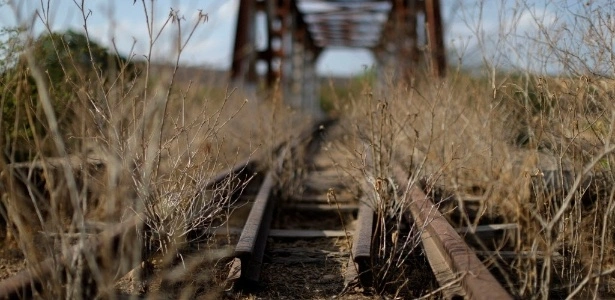
Brazil faces a challenge in transportation with over 10,000 kilometers of unused railway tracks, a third of the total.
The National Agency for Land Transport (ANTT) calls this a severe underutilization of resources, hindering infrastructure and economic growth.

The most affected region is the Northeast, home to 3,618.9 kilometers of these dormant tracks.
The South and Southeast follow closely, marking a problem that spans various geographic areas.
Notably, the North region exhibits no economically unviable tracks, showcasing regional economic and rail utility disparities.
Economic difficulties and logistical challenges deter concessionaires from operating these unprofitable sections.
 Stalled Tracks: Brazil’s Battle to Rejuvenate a Third of Its Railways. (Photo Internet reproduction)
Moreover, the poor condition of many tracks prevents companies from assuming responsibility, as doing so would incur hefty financial penalties.
To address this, the Brazilian government passed the Railway Law in 2021, simplifying the track return and reallocation process.
Nonetheless, this process requires detailed technical studies and contract adjustments, often extending up to three years.
Since this law’s enactment, only one concessionaire has managed to return a track section, reflecting the slow pace of resolving these issues.
On June 5, the Ministry of Transport plans to introduce new regulations to streamline this procedure.
This initiative aims to hasten the return of unused tracks and is expected to unlock R$30 billion ($5.8 billion) in new investments for the rail sector.
These investments can reactivate dormant tracks, transforming them into routes that boost economic and social development.
This situation underscores the urgent need for strategic management and innovative policies to fully leverage Brazil’s extensive railway network.
The goal is not merely to address a logistical challenge but to propel national development forward.



GIPHY App Key not set. Please check settings