
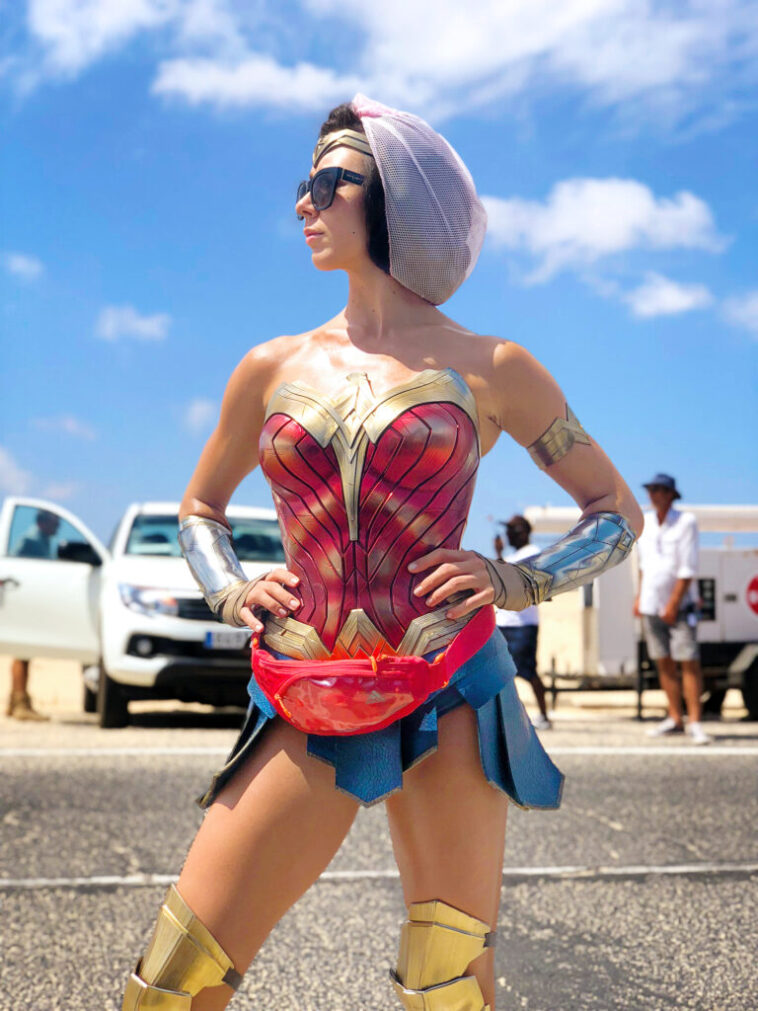
For performers looking to break into Hollywood, stunt work offers many similarities to dance: extreme physicality, honed body awareness, and the ability to adapt quickly to new movement styles. Dancers are already equipped with many of the skills necessary for stunts and, with a little training, can transition into body doubling and action scenes for fantasy, superhero, and horror movies. Here, three dancers-turned-stunt-performers share their paths onto movie sets and how their backgrounds have helped them excel in this field.
The Dance Difference
“That base foundation of movement translates,” says Lee Chesley, a stunt performer and former b-girl who has worked on films such as Avatar: The Way of Water, Jumanji: The Next Level, and A Minecraft Movie. She says that dancers’ body awareness and their ability to pick up movement quickly can ease the transition into stunt work, particularly the martial-arts–inspired moves often involved in fight choreography. Alicia Vela-Bailey, a lifelong dancer and former Pussycat Doll in Las Vegas who’s appeared in Avatar, Divergent, Wonder Woman, and multiple movies in the Marvel franchise, agrees. She noticed that having an “attention to detail and knowing your body lines” helped her pick up fight sequences and make the steps look more natural.

Being able to adapt to different movement styles was key for Christiaan Bettridge, who danced professionally at the Moulin Rouge in Paris and now has a stunt career spanning movies from Wonder Woman to Deadpool & Wolverine. For Wonder Woman, she needed to carry herself in a strong yet feminine manner, while other projects have required a grittier style. Her ability to understand these nuances and adjust her posture, angles, and stance accordingly have been major assets on set.
When Vela-Bailey was auditioning for the first Avatar movie, she contributed to the creative process of helping the team experiment how a “10-feet-tall, catlike alien” would move. “Having a dance background was super-helpful,” she says, giving her confidence to improvise with the movement qualities—strength, agility, flexibility, and grace—that casting directors were looking for. She’s also found that she’s better able to understand the body language of her characters. “As dancers, we’re able to emote with our bodies, and that really helps in the performance side of stunts,” says Vela-Bailey.
Christiaan Bettridge on the set of Wonder Woman. Courtesy Bettridge.
Making Connections and Skill-Building
In Hollywood, it’s all about who you know, which is how Bettridge, Vela-Bailey, and Chesley all got their starts. “Everything in stunts is word of mouth,” says Chesley. “You can send people your resumé and reel, but in my experience, I’ve gotten more work from people recommending me.” Bettridge’s first gig as a stunt double came after a friend got her in front of the stunt coordinator for Wonder Woman, and he noticed that she looked similar to leading actress Gal Gadot.
Because formal auditions aren’t a common occurrence, connections are formed through open gym sessions and at training centers—Chesley recommends Tempest Academy and Joining All Movement in Los Angeles. “Open gyms are a great place to learn and be safe while learning,” says Vela-Bailey, who suggests striking up conversations with others and asking to learn a new skill.
 Chesley (left) as Awkwafina’s stunt double on Jumanji: The Next Level. Courtesy Chesley.
Consider adding martial arts training to build a stunt-ready resumé. “Find one that suits you,” says Bettridge, who recommends tae kwon do, jiu jitsu, kick boxing, or wushu to get a sense of basic fight training. When it comes to creating effective fight scenes on camera, “knowing how to throw a punch and take a reaction is super-important.”
Chesley found that her background in breaking was also a plus. For example, the falls known as suicides in breaking prepared her to wreck (a stunt term for when your body hits a solid surface like pavement or a wall). Versatility is seen as an advantage, so consider expanding your skill set beyond fighting and wrecking with experience in high diving, gymnastics, trampolining, wire work, or stunt driving.
A Stepping Stone for Other Roles on Set
If you’re looking to build a long-term career in film, stunt work is a great place to begin and can lead to work as a second-unit director or fight and stunt coordinator—the “choreographers” of the stunt world. Coordinators design action scenes, rehearse the actors, and collaborate with a team to create the details of these fantasy worlds. Even if you’re not a coordinator, stunt performers are often involved in the creative and teaching processes. Since beginning work on the first Avatar film back in 2006, Vela-Bailey has helped audition and train the cast for the sequels and was a key figure in developing the movement style of the series’ Na’vi people. Stunt work also prepared her to branch out into acting, and she’s booked multiple horror movies. “Doing stunts is the greatest acting lesson ever,” she says. “You can learn so much by just being on set.”
 Alicia Vela-Bailey on the set of Wonder Woman. Courtesy Vela-Bailey.
The post Why Dancers Make Strong Stunt Performers in Action Films appeared first on Dance Magazine.




GIPHY App Key not set. Please check settings