
Dance Magazine has been both a resource for and a reflection of the dance community since publishing its first issue (then titled The American Dancer) in 1927. As the magazine’s centennial approaches, we’re examining how the publication grew and changed over each decade, highlighting some of our most memorable covers. Next, a deep dive into the 1960s, a time of political unrest that led to powerful and world-changing art.
Throughout the 1960s—a decade defined by civil rights activism, antiwar protests, and countercultural movements—dance emerged as a potent form of political expression. Choreographers including Alvin Ailey, Martha Graham, and Merce Cunningham used their art to capture the spirit of the era, emphasizing themes of freedom and individuality. The dance community amplified growing calls for social and cultural change in the wider world.

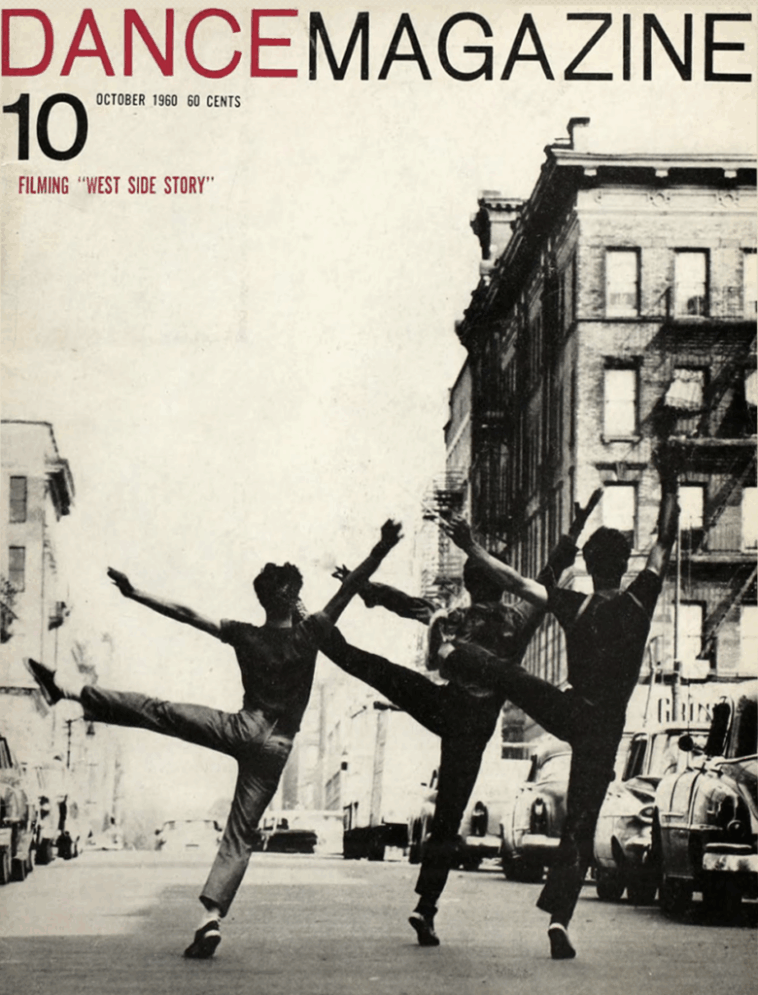
October 1960
Uncredited cover photo of the West Side Story film cast
The decade saw a rise in dance-focused movie musicals, including Jerome Robbins’ West Side Story. Celebrated as a pinnacle of the genre, the film showcases Robbins’ groundbreaking use of choreography to advance the plot, redefining dance’s relationship to storytelling in mainstream cinema.
June 1961
 Cover photo of Paul Klee’s Hopeful Angel, courtesy Klee
In the 1960s, a new dance-education movement departed from older training systems. It prioritized self-expression and freedom of movement, reflecting a cultural shift away from tradition and towards creativity. The June 1961 cover story describes how the approach encourages children to express themselves.
August 1962
 Uncredited cover photo of an unnamed Ballet Folklorico soloist in Wedding in Tehuantepec
This issue highlights the importance of international dance, with a focus on Ballet Folklorico de Mexico’s success on tour. Founded by Amalia Hernández, Ballet Folklorico aimed to combine various Hispanic heritages in a single, cohesive company. In the cover story, Hernández says that “even more important than any traditional step is its human meaning and its theatrical validity.”
November 1963
 Uncredited cover photo of Ginger Rogers performing on “The Red Skelton Show”
In her November 1963 cover feature, world-renowned dancer and entertainer Ginger Rogers reflects on the role dance played in her remarkable life. While not classically trained, “her school was the stage,” as the article title claims. Rogers discusses the value of learning through experience and encourages young people to try everything, echoing the spirit of the era.
December 1964
 Uncredited cover collage featuring (from top left) American Ballet Theatre in Les Sylphides, cabaret duo Marcella and Ravell, the Spanish dance star Teresa Viera Romero Torkanowsky, Alvin Ailey American Dance Theater in Revelations, and dancer and actor Peter Gennaro
The bold colors and detailed Pop Art–style graphics of this cover capture the visual identity of the 1960s. The issue features the annual directory of dance attractions, and the format of a record with multiple images highlights the variety of dance styles that were prevalent at the time.
March 1965
 Cover photo of Toni Lander and Royes Fernandez, by Jack Mitchell
While the 1960s were about breaking tradition, ballet and technique still held an important position in the dance world. Originally produced in the 19th century, La Sylphide began a balletic revolution towards pointe as a technical form of dance rather than an acrobatic skill. During this decade, the American Ballet Theatre became the first American company to include La Sylphide in its repertoire, emphasizing the work’s continued relevance.
November 1986
 Cover photo of one of Anna Halprin’s “kinetic environments,” by Paul Ryan
During the 1960s, choreographer and performance artist Anna Halprin collaborated with architects to create what she called “kinetic environments”—a process pictured on the November 1966 cover. Halprin explored how dance could expand beyond the stage with her site-specific work, creating pieces that morphed and changed along with the dancers and audience. While controversial at the time, her approach became hugely influential.
December 1967
 Cover photo of Barbra Streisand, by Steve Shapiro
The iconic performer Barbra Streisand graces the cover of this issue—but the accompanying story more prominently features Herb Ross, the co-producer and director of musical numbers for the movie adaptation of Funny Girl, starring Streisand. The piece discusses the importance of movie musicals and how they help bring the work of the dance community to a wider audience.
November 1968
 Cover photo of Eleo Pomare, by Sigrid Estrada
This issue features the work of up-and-coming Black artists Eleo Pomare, Arthur Mitchell, and Pearl Primus. Published as the Civil Rights Movement culminated, it supported Black artists at a time when their voices needed amplification. Pomare, in his moving interview, says, “I don’t create works to amuse white crowds, nor do I wish to show them how charming, strong, and folksy (we) are… Instead I’m showing them (our) experience from inside.”
February 1969
 Cover photo of Twyla Tharp, by Bob Barry
Our final cover features the renowned choreographer Twyla Tharp performing her first independent piece, Tank Dive. This issue focused on artists who had graduated from dance conservatory programs and the significance of their dance education on their subsequent careers. While not explicitly interviewed in this issue, Tharp’s graduation from Barnard is mentioned in her blurb as a nod to the value placed on dance education throughout the 1960s.
The post A Look Back: Dance Magazine in the 1960s appeared first on Dance Magazine.




GIPHY App Key not set. Please check settings