
Ahead of a new album, Claude VonStroke is rejecting industry expectations and predictable formulas as he returns to the stripped-back intimacy that first drew him to dance music at the turn of the century.
His upcoming album, Wrong Number, throws away the playbook, relying on instinct to chase fresh ideas, especially when they lead somewhere unexpected.

“The whole concept is that I’ve always been going against the grain a little bit, and that’s not necessarily a bad thing,” VonStroke said in an exclusive interview with EDM.com. “Making mistakes and going in the wrong direction can work out for you in the end, if you’re willing to take some risks.”
For the deeply influential DJ and producer, whose real name is Barclay Crenshaw, that mindset isn’t new. It mirrors the same approach that guided his earliest records. Rather than following trends, he carved out his own sonic identity, a philosophy that often meant his music simply “came out different.”
Those instincts fueled the creation of one of the most recognizable brands in house music, Dirtybird. But there was a pivotal moment when Crenshaw realized he didn’t want to keep operating inside the ecosystem he helped create.
“There was a natural point: when I sold the record label,” he said. “That was incredible, and I love everything that happened with that, but I was done with it. I did everything I wanted to do.”
The hiatus that followed gave him space to reflect, and he found himself looking back to the very start.
“I remembered 2004, when I was just starting out, and what I was listening to, and the very first clubs that I was going to, and how fun and interesting that was,” he recalled. “I have this yearning to go back to the beginning.”
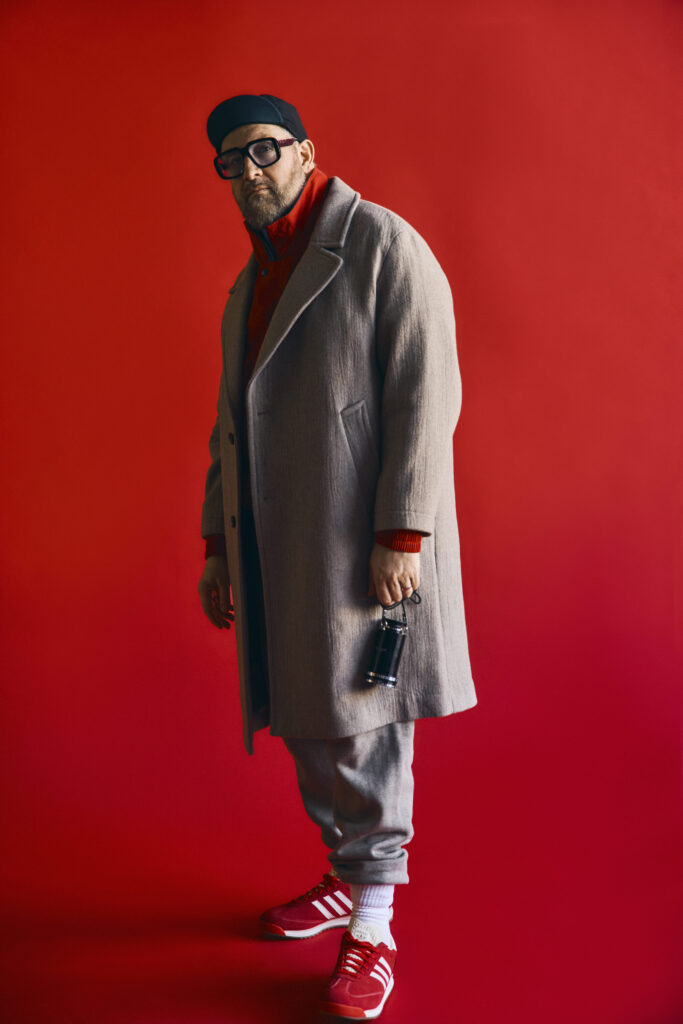
Claude VonStroke.Credit: Image courtesy of Press
That mindset ultimately shaped Wrong Number, which marks the most personal record of Crenshaw’s career. Nearly every voice heard on the album comes from inside the Crenshaw household. His son, Jasper, a student in USC’s pop music program, and his daughter, Ella, contributed vocals throughout the record.
Even the album’s opening track features a recording of Crenshaw and his wife, Aundy, arguing over the phone. It’s the kind of intimate chaos most couples would hide, but he pressed play anyway.
“There are no other guests on the album, so it is really a family affair,” Crenshaw said.
The collaboration with his family became the emotional core of the project. Rather than approaching the vocals like traditional songwriting sessions, he and his children developed a fluid process built around experimentation.
“(Jasper) came in and listened to all the songs, and he was just riffing,” Crenshaw said. “Then he would leave and I would chop it all up, and mangle it until he didn’t even know what it was anymore.”
The album even includes a choral piece from Ella and Barclay, who each wrote and sang a few notes. Crenshaw smiled in reflection about the effort it took to capture the moment, calling it “kind of insane, just to get a two-second thing in the beginning of the song.”
Yet it’s precisely those small, painstaking touches that make the record feel so personal. After over two decades of studio experience, he says working with his kids means staying open to their fresh perspectives while acknowledging the “parent dynamic.”
“They’re so good now, that I’m almost learning from them,” Crenshaw gushes. “They think of chord progressions and things that I would never think of, and they surprise me all the time.”
That sense of rediscovery extends beyond the studio and into Crenshaw’s return to the stage. Instead of massive festival crowds, his upcoming shows will take place in tiny venues, some with only a few hundred people present.
For an artist who spent years commanding mainstages, the decision represents a deliberate shift in scale. For Crenshaw, the appeal of small venues is simple.
“In a room with 300, 500, or 700 people, you can be more of a storyteller, you can take more risks and you can go deeper,” he said.
In intimate spaces, Crenshaw explains, the relationship between DJ and audience changes. He sees the small rooms as an opportunity to rebuild the intimacy that originally defined underground dance culture. However, stepping away from the system he helped build isn’t necessarily the smartest career move on paper.
“I feel like I’m going in the wrong direction, which is the right direction, of course,” he says with a laugh. “But there are trade-offs. It’s the worst possible business decision.”
Crenshaw’s willingness to move against the current also shapes his outlook on where dance music might be headed next. In recent years, tech house has become synonymous with festival energy: a streamlined, high-impact sound designed to move large crowds. But he believes the genre’s dominance may have also created space for something new to emerge.
“If you wanted to short it like a stock, it would be time to short tech house,” he chuckles.
 Claude VonStroke.Credit: Image courtesy of Press
He views the rise and fall of popularity within EDM’s sub-genres as a natural cycle within the scene, where periods of commercial polish often lead to renewed interest in experimentation. Technological shifts may accelerate that process even further.
“I think the entire world is going to have a little bit of an analog backlash,” he said. “The anti-phone and anti-AI things are coming down the pipeline. But I don’t know. It might be too much to fight.
Crenshaw acknowledges AI’s impact on electronic music, but firmly believes that human emotion is essential to make something meaningful. “Dance music is interesting because you theoretically could just make it in AI now,” he said. “But you still need people to have vibes.”
To that end, Crenshaw says his own path forward relies on following instinct. He relates his creative process to writing a story, following internal guidelines instead of strict rules.
Like a “superhero” who can’t suddenly break from their nature, he shapes his music according to his artist’s “character” personality.
“There are no rules, that’s the thing,” he says. “The rules are all in (your head), and I do have some. You do need some boundaries to create who you are. But if the boundaries are too negative and self-defeating, they can just take you out.”
For an artist whose career has been long defined by taking creative risks, Crenshaw believes that dialing the Wrong Number may simply be the most honest way forward.
The album’s first single, ‘Static in the Deep End,’ drops this Friday prior to its full release May. Secure your tickets to see Claude VonStroke on tour this spring.
Follow Claude VonStroke:
X: x.com/vonstroke
Instagram: instagram.com/vonstroke
Facebook: facebook.com/claude.vonstroke
TikTok: tiktok.com/@claudevonstroke
Spotify: tinyurl.com/yvayxk5z
The post How Claude VonStroke Dialed the Wrong Number to Find His Way “Back to the Beginning” appeared first on EDM.




GIPHY App Key not set. Please check settings