
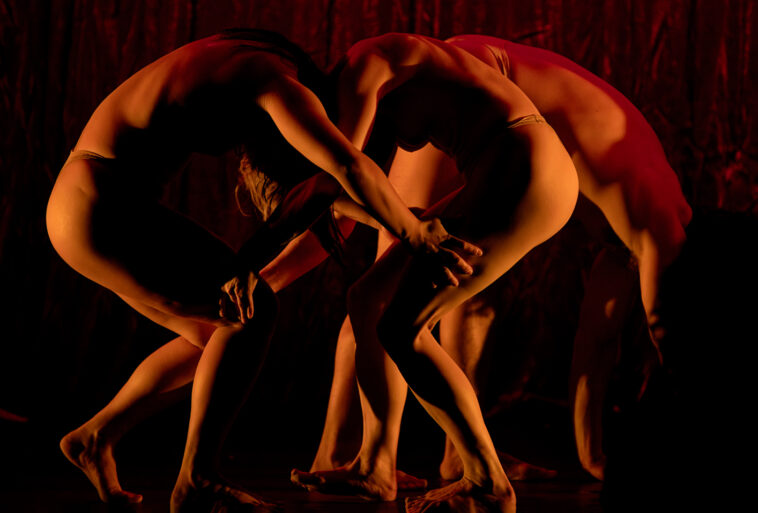
Onstage, the naked body can be powerful.
Nudity might convey intimacy between two performers, or become a plot point, or challenge expectations or norms about the body. For Urban Bush Women founder Jawole Willa Jo Zollar, nudity is a way of getting to the heart of a character, of “stripping away the artifice and coming to the literal naked truth of a person,” she says. Or it might serve to create an illusion, as is often the case in Pilobolus’ work. “When you take three or four nude bodies and put them together, you start to lose track of whose limb is whose, and they become a larger picture,” says Renée Jaworski, Pilobolus’ co-artistic director and a former dancer in the company. “It allows for the audience’s imagination to bring in their own idea of who that person is or what they’re doing.”

Whatever its purpose, nudity occurs frequently in dance—meaning that many dancers will be faced with the choice of whether or not to perform nude. And that’s often a complex question, wrapped up in the intense physical and emotional vulnerability that can come with being naked onstage. From the decision-making process until the final curtain call, dancing nude requires thoughtfulness and care.
To Bare or Not to Bare
Choosing whether or not you’re comfortable performing nude involves considering your boundaries, the context of the nudity, and the culture of the rehearsal process.
Start with yourself: Zollar suggests investigating any discomfort you feel around the idea of nudity. “Is that coming from the environment, or the fact that it’s new, or do you feel unsafe?” she says. “Try to discern comfort versus safety and not let that get emotionally jumbled.”
While feelings of shame or embarrassment around nudity don’t have to be a dealbreaker, they’re worth exploring. Keep in mind that—as Nederlands Dans Theater company member Nicole Ishimaru, who has performed nude in works like Jiří Kylián’s Vanishing Twin, points out—your relationship to your body is likely constantly changing, and there may be performance days when you’re not feeling your best.
Molly Lieber in STAMINA. Photo by Maria Baranova, Courtesy Dear.
It can be useful to consider whether the proposed nudity is something that interests you as an artist. This will depend largely on the purpose of the nudity, which intimacy director and dance artist Nicole Perry says is something a choreographer should be able to explain or contextualize. It’s worth trying to get as much information as possible about the degree and length of the nudity, the performance setting (will you be in a large proscenium theater or a black-box theater where you’ll be up close to audience members?), how you’ll be lit, and whether there will be complicating factors like partnering or floorwork.
The way a choreographer or creative team responds to such questions will likely indicate how open they’ll be to collaboration and feedback, which New York City–based dance artist Molly Lieber says is a crucial factor for her when deciding whether to perform nude. “Is this a hierarchical system or a collaborative system where my voice is going to be heard?” she asks. “Are there platforms in place within the project for communication and dialogue?”
If a project is clear about including nudity in casting notices or audition calls, you’ll have an opportunity to decide if you’re comfortable from the start. Other times, you may be presented with the decision once there’s a contract in your hands. But as dance becomes more process-based, it’s becoming increasingly common for the question of nudity to crop up during rehearsals, which can complicate your choice.
Perry says that in such scenarios, you’re not obligated to do anything if it wasn’t already a condition of employment. But that doesn’t mean that you won’t feel obligated. She encourages dancers not to allow themselves to be rushed into a decision, and to try to make the choice that’s right for them despite any pressures they feel. Dancers in that situation may also want to ask for a “nudity bump”—a pay increase that’s standard in film and television work.
Rehearsing and Performing Nudity
Once you’re in the studio, it’s the choreographer, director, or intimacy director’s job to foster an environment that feels safe, and to respect your boundaries as a person and artist. That said, it can be helpful to be aware of best practices around nudity so that you can advocate for yourself and ask for what you need.
When, exactly, to start rehearsing nude depends on the preferences and needs of you and your fellow dancers. You may want to gradually work up to nudity as you build trust, or explore it from the very beginning, or something in between, such as wearing pasties instead of full nudity. If you’re rehearsing clothed, it can be helpful to wear garments that replicate nudity as closely as possible, suggests Ishimaru, like spaghetti-strap tank tops and shorts. That will help you begin to understand what the movement will feel like. Throughout the process, don’t hesitate to speak up if there are choreographic elements that could be adjusted to make you feel more safe or comfortable nude.
Whenever nudity is introduced in the studio, there should be strict protocols to ensure that the space is private and closed, says Perry. This might mean covering windows, putting a sign on the door, and ensuring that no one extraneous is present. She also suggests a “no phones” rule to protect dancers’ privacy.
As a dancer, it shouldn’t be your job to enforce these rules. “There should be someone who is confident in holding that, and it shouldn’t be the dancers in their nude state also being asked to advocate for their own safety,” Perry says. These same guidelines should apply once you move into the theater, both during rehearsals and backstage during performances.
 Pilobolus in Pilobolust. Photo by Emily Denaro, Courtesy Pilobolus.
Perry says it’s best practice for the company or project to provide robes for dancers to use during rehearsals and performances. Especially in the theater, she says, robes or cover-ups are crucial not just for dancers’ safety and comfort, but for everyone present. “Just because a dancer is comfortable walking back to their dressing room nude doesn’t mean that other people in the space have come to work to encounter a nude body in the hallway,” says Perry.
Intimacy director and professor of movement and dance Renee Redding-Jones strongly recommends establishing some sort of opening and closing practice when working with nudity. “Have a ritual that signifies the beginning of the work day,” she says. That could be an opportunity to check in about any needs you have that day and to share feedback or boundaries. Then, “come together again at the end so you can go off to your life and not take it with you.”
The Role of Choreographers
Though dancers can advocate for themselves and make informed decisions about nudity, it’s the choreographer’s job to implement and enforce industry-standard best practices related to casting, rehearsing, and performing nude. Here are further suggestions from artists and intimacy directors on how to create a safe space.
Hire an intimacy coordinator. “Make it easier for yourself by hiring someone to have these conversations,” says intimacy director Nicole Perry. “It makes dancers feel safer because the power dynamic is removed, and it helps you facilitate a more consentful space.”
Consider the movement. Dancers may not be able to safely execute the same movement nude as they could clothed. Floorwork, for example, can be painful on the naked body and lead to floor burn, and some partnering movements may be impossible due to the slipperiness of the body or the need to place hands in areas that don’t feel safe or appropriate. Depending on the context of the work and the purpose of the nudity, you’ll also want to be particularly intentional about moments where, say, the legs are opened wide to the audience, or one dancer’s face ends up near another’s crotch.
Communicate with theater workers. “Sometimes we forget about the crew, and don’t tell them things they might need to know for their own safety,” says Perry. “They didn’t necessarily come to work today to see naked bodies.” Give them advance notice that there will be nudity, and make sure they have an opportunity to meet dancers while they’re still clothed.
Have a phone plan. Though most dance venues disallow phone use anyway, you’ll likely want to be especially strict about that policy to protect performers’ privacy. Make sure it’s clear in marketing materials, signage, and announcements that the show contains nudity, and that the no-phone policy will be enforced. (Some shows even take patrons’ phones at the door, or place them in bags.) Perry suggests that choreographers request training sessions for theater-house staff, to ensure that they feel confident handling phone-use issues.
Trust your cast. Continue to check in with your dancers about how they feel, both within the movement itself and the rehearsal process. Unless you’re also performing in the piece, only your dancers know what it feels like to dance your movement while nude, so listen to and truly consider their feedback. “Collaborate with your performers,” says Pilobolus co-artistic director Renée Jaworski. “If they feel like they’re lying when they’re nude, you have to listen to that.”
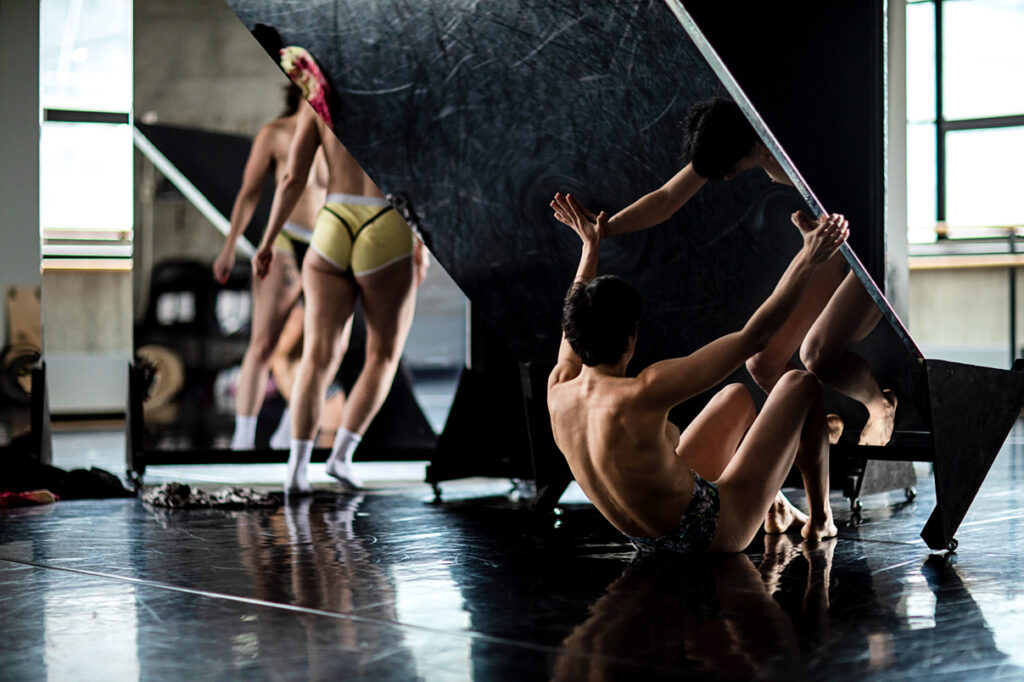 From left: Eleanor Smith and Lieber in STAMINA. Photo by Maria Baranova, Courtesy Lieber.
Source link




GIPHY App Key not set. Please check settings