
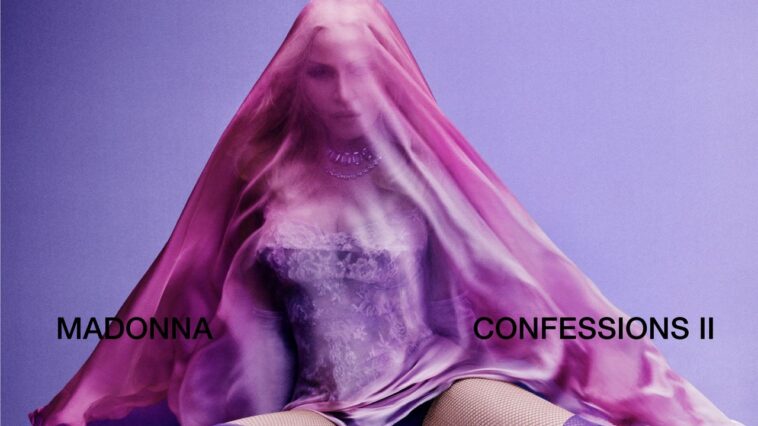
Price has been open about how much his work with Madonna means to him—she pulled him out of obscurity in the early aughts to work with her on the Drowned World tour and, later, Confessions, leading to hits with Kylie, the Killers, and Dua Lipa—and his love for her comes through in this album’s sheer attention to detail: The split-second rocksteady break on “Danceteria”; the nods to Erotica (on “My Sins Are My Savior,”) Bedtime Stories (on “Betrayal”), and Ray of Light (in the chord progression on “L.E.S. Girl”); and even in the fact that this might be the first Madonna record in years where she isn’t singing through grills.
Now, you do not have to be Stuart Price to whip up a pack of house and disco beats, get Madonna to topline them, and be safe in knowing it would be her best record in many years. (Why didn’t the EDM atrocity MDNA work? Because Madonna’s club music has always been social, sexual, and emotional, and the clinical, venture-capital-core aggression of EDM, while having its place, is the polar opposite.) But the thread of autobiography that runs through CONFESSIONS II is what makes it a better, more unwieldy, more satisfying piece of work.

Madonna describes this album as an outgrowth of the shelved biopic she was writing for Universal. This is how you get a song like “Danceteria,” an extraordinarily fun hybrid of bouncy disco, squalid electroclash, and sexy French touch, which recounts Madonna’s early years thrusting demo tapes in the faces of DJs at the Roxy, Paradise Garage, and the titular Danceteria. She whizzes past the most legendary figures of Madonna lore and, by extension, downtown NYC lore: Mark Kamins, the DJ who championed her early songs; club elevator girl and, later, actress Debi Mazar; Like a Virgin cover stylist Maripol; one-who-got-away Basquiat. She namechecks the B-52’s and the Puerto Rican boys who “make me craaaaaazy” and interpolates Lou Reed for a second; the whole song is excitable and frenzied—exactly how it feels to go to the club for the first time—and genuinely new territory for Madonna, who, until 2023’s retrospective Celebration tour, forcefully squashed any nostalgia that crawled into her work.
That song’s flipside is “L.E.S. Girl,” the album’s poignant closer. A dreamy lullaby whose dusky combination of drum machine and gentle guitar recalls, if you can believe it, early Beach House, “L.E.S. Girl” is suffused with a tenderness that’s rarely expressed in Madonna’s music. She sings about the stuff that happened outside the clubs: Scraping by to make rent, wearing threadbare clothing. The lyrics on “L.E.S. Girl” sound like they come from somewhere deeper, more raw than the emphatic tone poems Madonna usually writes: “He played guitar on St. Marks Place/Had a Marlon Brando face/Painted nails the same shade as his boots/Bleached hair, dirty roots.” There’s a resolute feeling to the way Madonna ends the song—repeating the line “everything fades away”—that speaks to how many of her friends, family members, collaborators, and lovers have died too early. But “L.E.S. Girl” still feels wounded and open in a way that I’m not sure Madonna has ever sounded on record.




GIPHY App Key not set. Please check settings