
Clips of convention standouts are perennially popular on social media, so it’s unsurprising that filming at these events has become commonplace, with many organizations hiring professional videographers. But the etiquette around filming by students can be murky—and the pressure dancers face to post constantly makes these situations even more difficult to navigate. So when is it okay to pull out a smartphone and film yourself in the convention ballroom?
Know Your Cue
First and foremost, always follow a convention’s stated rules about filming. Even if recording is allowed, double-check with the teacher before pulling out your camera. Unless you get enthusiastic approval, it might be best to wait until after class to record. The convention Artists Simply Human, for example, allows a little discretion for parents or teachers to film on the side as long as they’re not being disruptive, but regional convention director DJ Smart says that there is no filming allowed by students during class time. “It’s not worth it for dancers to abandon the guidance and leadership of the instructor and risk the sacredness of the class space and privacy of other students, merely to find ways to showcase themselves,” he says. “I understand wanting to capture those memories, but that can be done after class on students’ own time.”

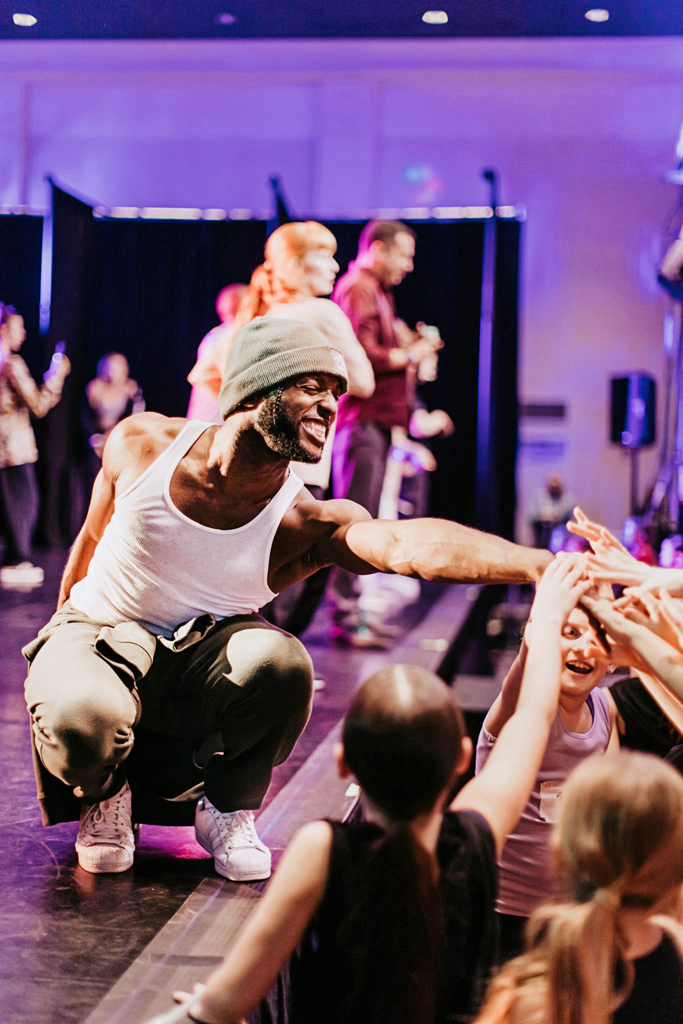
DJ Smart teaching at Artists Simply Human. Photo by Ansley Pacetti Photography, Courtesy Smart.
Evan Turnley, a student at Dance Institute in Austin, Texas, and Tremaine’s Teen 2025 Dancer of the Year, attends upwards of 10 conventions annually. His golden rule of filming is to reserve it exclusively for the last 10 minutes of class. “If you start trying to film yourself as soon as you’ve learned the combo, you’ll miss important notes from the choreographer about how they want the movement to look,” he says. “I feel much more confident filming at the very end, because I know I’ve gotten everything I can out of that class.”
Share the Space
 Stephanie Longo teaching at Innovative Fusion Convention. Photo by Markos Williams, Courtesy Longo.
Stephanie Longo, Turnley’s teacher at Dance Institute, emphasizes the importance of spatial awareness when filming—something both students and their parents should think about. “I very often see parents of little ones going right up front, against the stage, or on the steps, trying to film their dancer, which is extremely distracting to the students and takes away from their experience,” she says. Whether it’s your mom or a fellow dancer holding the camera, they should try to find an out-of-the-way place to record.
Respect the Product
Courtney Ortiz, a faculty member at Streetz Dance Convention, encourages dancers to consider each choreographer’s intentions, as well as the convention’s general filming guidelines. “If it’s a combo the choreographer uses for auditions, for example, they may request no cameras or no posting videos of that specific class,” Ortiz explains. “I don’t want us to get to a place in our industry where young dancers assume they can get their phones out and film anything they want when they enter the professional world of class-taking.”
When posting combos, giving proper credit to the choreographer is a must. Turnley also always tags his studio and the convention. You might not get a “like” or “share” from the choreographer, and that’s perfectly okay. But be sure to express your gratitude face to face. “The in-person thank-you after class is still my preferred way to connect with dancers, more than anything online,” Ortiz says.
 Courtney Ortiz teaching at Streetz. Photo by Big Light Studios, Courtesy Ortiz.
And however proud you may be of that video of you nailing a combination, remember that the routine still belongs to the choreographer—100 percent. “The combos taught at conventions are not something that dancers or teachers can work into their comp or recital numbers,” Ortiz says.
Prioritize the Present
Don’t let the quest for the perfect video derail your convention weekend. It’s gratifying to post a killer combo, but the real takeaway from conventions is the experience itself. “When you’ve just done three classes in a row and your brain is fried, expecting yourself to be camera-ready can add a whole layer of unnecessary pressure,” Ortiz says. “It’s exciting if you happen to get a great video to post, but at the end of the day, you’re there to dance, connect with other dancers, and learn from incredible choreographers.”
Smart agrees: “Watching, listening, and making continuous effort in real time will always be a more efficient way to further your dance education than recording and promoting yourself.”
The post Filming Do’s and Don’ts for Convention Students appeared first on Dance Magazine.




GIPHY App Key not set. Please check settings