
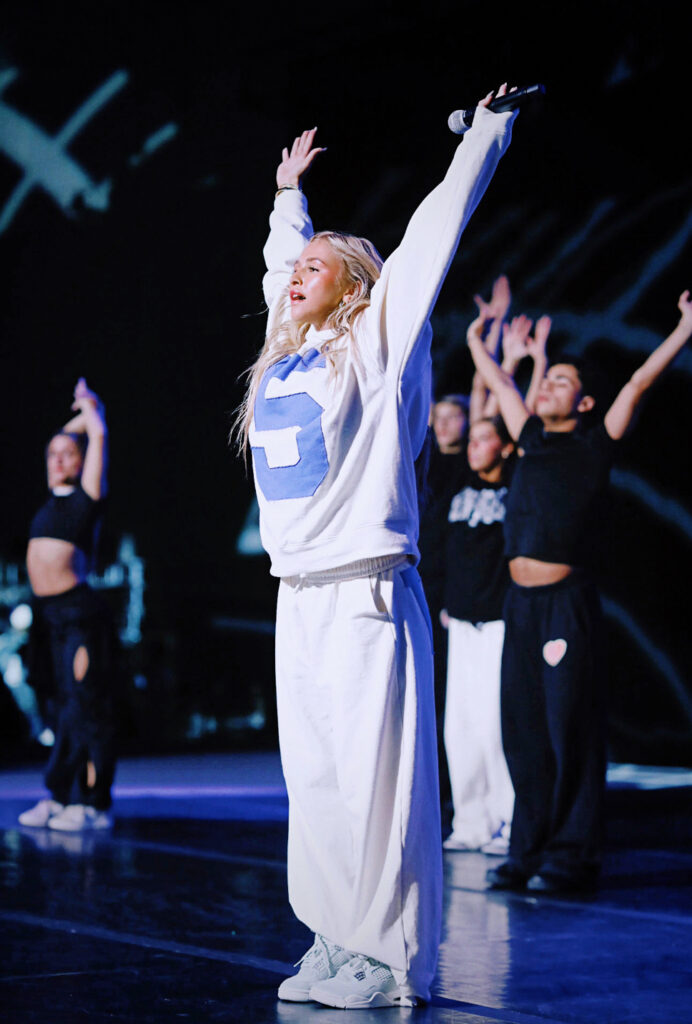
Over the past decade, a growing number of competitive dancers have amassed large social media followings by sharing dance-related content, becoming stars in a way that previous generations of comp kids couldn’t have imagined. The benefits of this exposure can include networking, training, and professional opportunities. But the negative aspects of social media fame—the anxiety and pressure it often creates, for example—can’t be ignored.
Is the chance for career growth worth the possible complications that come with widespread recognition? Two former comp-kid influencers and a studio owner say that the answer is, unsurprisingly, complicated.

Opening Doors
Ella Horan, a professional dancer, choreographer, and film director who built her online presence partly by vlogging at competitions and conventions, says that a majority of her dance opportunities have come via social media. “It’s from people seeing my work and then wanting to work with me, not having to set foot in an audition room,” she says. She adds that many of the dancers she currently casts and works with began as friends from the convention scene whom she kept in touch with online.
Joziah German, a company member with Ballet BC who grew a following as a competitive dancer, also built important connections through his digital presence. By networking on social media at a young age, he began to understand the scope of the industry and where he might eventually fit inside it. “My foundation being set earlier on helped me to have my feet and to have a safety net,” he says.
Ella Horan teaching at Five World. Photo by Julia Rose, Courtesy Horan.
But while online recognition might open doors for dancers, their work ethic and attitude are more important determinants of success, says Karla Geier, owner of Expressenz Dance Center in Indianapolis. “The number of followers you have is not going to be enough (to keep a job),” she says. “It’s not the substance of who you are as a dancer.” For older students entering the industry, Geier recommends keeping updated dance footage accessible online, but she doesn’t think that seeking a following is a must.
Under Pressure
One potential downside to fame is the added pressure it creates for dancers during competitions. “It made me feel like I was under a microscope sometimes, because I knew people who were watching online were now watching in person,” recalls Horan. However, she says she used that visibility as motivation to train even harder.
Many dancers already suffer from perfectionism, and Geier thinks social media use may exacerbate the issue. “I’ve seen kids really analyze their photos or their videos because they don’t want to post something that they don’t think is good enough,” she says. “They’re putting themselves in this competitive environment that already has natural stress and pressure, but I feel like that’s elevating it to another level.”
 Karla Geier teaching at Expressenz Dance Center. Photo by Toni Bailey, Courtesy Geier.
But that kind of increased visibility is also part of today’s professional dance reality. German says that dealing with it as a competition dancer helped him develop coping skills he continues to use today. “You can never get away from it, but how you handle pressure is what makes or breaks your career,” he says.
Remembering the “Why”
Horan, who now teaches at conventions, recommends that dancers seek out opportunities through social media, but not at the expense of their training. “I see a lot of dancers really worry about the footage they are getting in these classes,” she says. “I feel like that’s the last thing they should be worried about. They should be worried about the content in the class and what they’re gaining from it.”
The pursuit of celebrity also puts dancers at risk of prioritizing external validation above their craft. Geier is concerned that dance influencers might measure their value based on sponsorships and popularity instead of their dancing. German agrees: “At a younger age, I think you should be focused on building a relationship with your passion and with your artistry,” he says. “I’m a little conflicted about where the line is and how we use social media without abusing it.”
The post How Social Media Gave Rise to the Convention-Circuit Celebrity appeared first on Dance Magazine.




GIPHY App Key not set. Please check settings