
Key Points
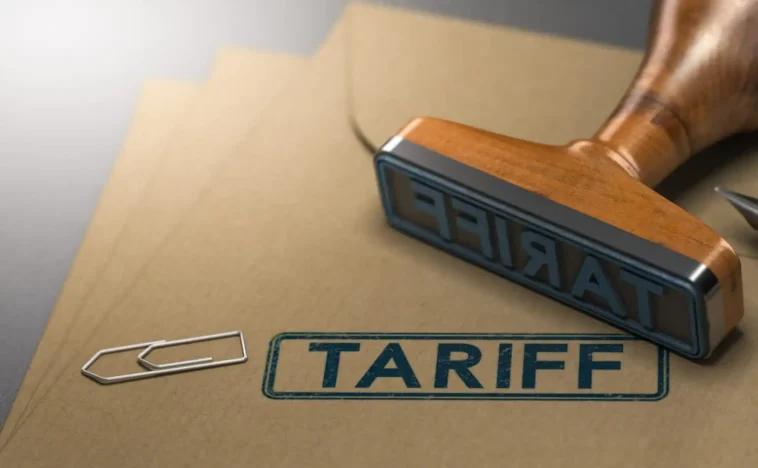
— Hours after the Supreme Court struck down his IEEPA tariffs, Trump announced an executive order imposing a blanket 10 percent global tariff under Section 122 of the Trade Act of 1974 — effective within days.

— Section 122 caps duties at 15 percent and limits them to 150 days without congressional approval, making the new regime narrower and time-bound.
— Trump is also eyeing Section 301, which allows the U.S. Trade Representative to impose duties on Chinese imports for four-year terms, renewable indefinitely.
The Supreme Court killed Donald Trump’s tariff regime on Friday morning. By Friday afternoon, he had a replacement ready.
Trump told reporters he would sign an executive order within three days imposing a blanket 10 percent tariff on all imports. The legal vehicle is Section 122 of the Trade Act of 1974, which allows duties of up to 15 percent to correct “large and serious” trade deficits without prior congressional approval.
The critical constraint is time. Section 122 tariffs expire after 150 days unless Congress extends them — a far cry from the open-ended regime the court just dismantled. Jefferies analysts called it a structural shift: future tariff actions will be “narrower, slower, and more legally constrained.”
 Radiograph of Brazil’s Soul under Trump’s 50% Tariffs and Sanctions. (Photo Internet reproduction)
Trump’s Plan B: A Global 10 Percent Tariff Within Days
But Trump is not stopping there. He is exploring Section 301, which lets the U.S. Trade Representative impose duties on Chinese imports over unfair trade practices. Unlike Section 122, these last four years and can be renewed indefinitely — a longer-term weapon aimed at Beijing.
For industries already reeling, the pivot raises as many questions as the ruling answered. Nike and Birkenstock saw immediate margin relief when the court struck down duties of up to 145 percent on Chinese goods. That relief may prove short-lived if the new tariff takes effect within days.
The industry’s plea is simple: predictability. The apparel and footwear sector urged Washington to work with Congress before acting again. What businesses got instead was a president reaching for the next tool in the drawer before the ink on the court’s opinion had dried.
Read More from The Rio Times



GIPHY App Key not set. Please check settings