
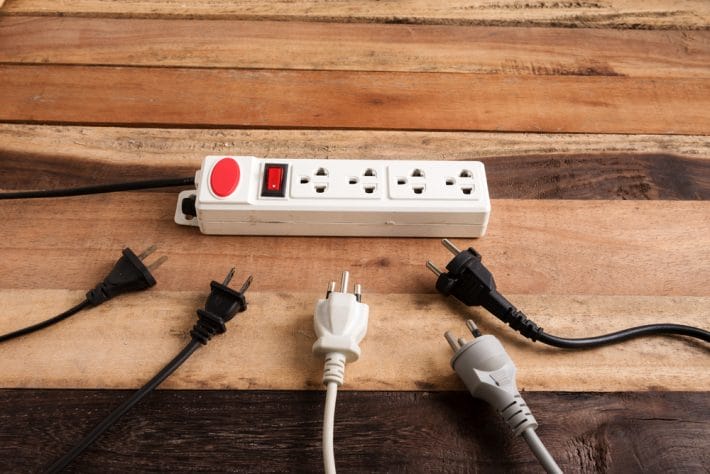
Many household electronics continue using small amounts of electricity while in standby mode, but the amount varies considerably by device, age, features, and settings. Oyls/Shutterstock
You turned off the TV, stopped using the computer, and unplugged your phone from its charger, but some of those devices may still be using electricity. Known as standby or “vampire” power, this is the electricity electronics consume while switched off or not performing their main function. Lawrence Berkeley National Laboratory estimates that standby power collectively accounts for roughly 5% to 10% of residential electricity use in a typical American home. The catch is that today’s biggest energy vampires may not be the same ones you remember from 20 years ago, because modern electronics have become much more efficient in standby mode. Instead of unplugging everything in sight, homeowners can save more intelligently by finding the devices in their home that are actually drawing unnecessary power. Here’s a list of 12 common culprits that, when unplugged, can lead to substantial savings.
1. Cable and Satellite Boxes
Cable boxes, satellite receivers, and DVRs are worth checking because some equipment remains active even when the television is off. These devices may need electricity to maintain program guides, network connections, software updates, and scheduled recordings, so pressing the power button does not necessarily eliminate their electricity consumption. That also means routinely unplugging a DVR may not be practical if doing so interferes with recordings or other functions you use. Check the device or service-provider settings for sleep, energy-saving, or automatic power-down options before resorting to unplugging it completely. If you have an older cable box that you rarely use, returning unused equipment may make more sense than paying for both the service and its ongoing electricity consumption.

2. Televisions
Older advice frequently portrays televisions as major energy vampires, but modern TVs can be far more efficient in standby mode than their predecessors. Current ENERGY STAR criteria limit certified televisions to 0.5 watts or less in passive standby and no more than 1 watt in active standby for network-capable models. However, features such as network connectivity, voice control, instant-on settings, and other background functions can affect how a particular television behaves when the screen is off. Check the TV’s energy or power settings for options such as Quick Start, Instant On, or network standby, especially if you don’t need the television ready to wake immediately. The bigger lesson is that a large television is not automatically a large standby-power problem, so check the settings or measure the draw before assuming unplugging it will produce meaningful savings.
3. Gaming Consoles and Entertainment Equipment
 Televisions, gaming consoles, streaming devices, sound systems, and other entertainment equipment can create multiple standby loads in one area, making the entertainment center a smart place to look for unnecessary energy use. AS project/Shutterstock
A television may be only one piece of an entertainment center that includes a game console, streaming device, soundbar, AV receiver, speakers, or older DVD or Blu-ray player. Some of these devices maintain internet connections or stay partially awake so they can download updates, respond quickly to a remote, or resume operation without a lengthy startup. Look for energy-saving, automatic-shutdown, or low-power settings on devices you use regularly instead of repeatedly unplugging the entire entertainment center. Equipment you rarely use is a better candidate for a switched power strip that can shut several devices off completely with one button. The key is separating equipment that genuinely needs an always-on function from accessories drawing electricity simply because nobody has bothered to disconnect them.
4. Desktop Computers and Monitors
Home-office equipment can quietly remain powered much longer than its owner realizes, particularly when a computer and monitor are left idle overnight. Rather than relying solely on unplugging them, configure computers and displays to automatically enter low-power modes after reasonable periods of inactivity. The Department of Energy specifically warns that screen savers do not save energy and recommends using a monitor’s power-management features and turning the display off when it isn’t needed. Modern efficient computers can consume surprisingly little power in properly configured sleep and off modes, which makes adjusting the settings an important first step. If a home-office setup includes several peripherals, a switched power strip can also make shutting down unnecessary accessories at the end of the day much easier.
5. Printers and Other Home-Office Equipment
The computer itself may not be the only device drawing electricity in a home office. Printers, scanners, external speakers, docking stations, external drives, and other accessories can remain plugged in around the clock even when they’re needed only occasionally. Start by enabling automatic sleep or low-power settings on equipment that supports them, particularly printers that may sit unused for days between jobs. For peripherals that don’t need continuous power, connecting several devices to a switched or smart power strip provides a convenient way to cut electricity without crawling underneath a desk every night. If you’re looking for hidden energy use, the entire workstation deserves attention rather than focusing only on the computer.
6. Chargers and Power Adapters
 Computers, monitors, printers, chargers, and other home-office accessories can remain connected around the clock, even when the workspace is used for only part of the day. Yanya/Shutterstock
Leaving one modern phone charger plugged into the wall probably isn’t the reason for a shocking electric bill, and homeowners should be skeptical of claims suggesting otherwise. Most products now draw relatively little standby power (often less than 0.5 watt), but today’s homes contain far more products with standby functions than they did decades ago. Think beyond your phone charger to laptop adapters, tablet chargers, rechargeable-vacuum docks, camera chargers, cordless-device adapters, and other power supplies scattered around the house. One tiny load may barely register, but dozens of unnecessary loads operating day and night can collectively matter. Unplugging chargers that aren’t serving a useful purpose is reasonable; just don’t expect one empty phone charger to transform the household budget.
7. Smart Speakers, Displays, and Connected Devices
Modern homes have introduced an entirely new category of always-on electricity use that older vampire-power lists often overlook. Smart speakers, displays, hubs, Wi-Fi extenders, connected controls, and similar devices need some electricity even while you’re not actively interacting with them because being available is part of their purpose. That doesn’t mean homeowners should automatically unplug useful smart devices, but it does make it worth taking inventory of equipment that is still connected. A smart speaker sitting untouched in a spare bedroom or an obsolete hub from a system you no longer use has little reason to remain powered 24 hours a day. In a connected home, asking “Do I still use this?” may uncover more unnecessary energy consumption than obsessing over every phone charger.
8. Small Kitchen Appliances With Displays
The generic advice to “unplug kitchen appliances” needs an important qualification because not every countertop appliance consumes meaningful standby electricity. Devices with external power supplies, remote controls, continuous displays, internal batteries, or constant network connections are particularly likely to draw power continuously. That makes an appliance with a digital clock, touchscreen, Wi-Fi connection, or other always-ready feature more interesting from a standby perspective than a basic appliance controlled by a mechanical switch. Walk through the kitchen and identify appliances that remain lit or connected even though you may use them for only a few minutes each day. Those are better candidates for measurement or unplugging than assuming every toaster and blender is secretly running up the bill.
9. Programmable Coffee Makers
 Kitchen appliances with digital displays, clocks, Wi-Fi connections, and programmable features may use electricity between uses, although standby consumption varies widely by model. Stock image/Shutterstock
Coffee makers deserve separate attention because today’s machines range from extremely simple brewers to connected appliances with clocks, displays, scheduled brewing, and Wi-Fi. Those convenience features can require the machine to remain partially powered long after the morning coffee is finished. If you depend on a programmable timer to wake up to a fresh pot, that standby consumption is providing something you value and may be worth keeping. If you never use the clock or programming features, however, there may be little benefit to keeping the appliance powered around the clock.
10. Decorative and Seasonal Lighting
Decorative lights need a slightly different strategy because lights that are illuminated aren’t technically using standby power; they are simply on. The waste happens when string lights, window decorations, accent lighting, or other decorative products continue operating long after anyone is around to enjoy them. A timer, smart plug, or automatic schedule can turn decorative lighting off overnight or during daylight hours without requiring someone to remember every day. Smart-home controls can use schedules and occupancy information to automatically manage connected devices and reduce energy consumption. That makes automation particularly useful for decorative items whose energy waste comes from unnecessary operating time rather than traditional vampire power.
11. Garage and Workshop Chargers
Don’t worry about an unplugged cordless drill sitting on a shelf; look at the charging equipment connected to the wall instead. Workshops and garages can accumulate chargers for power-tool batteries, lawn equipment, rechargeable lights, automotive accessories, and other devices that remain plugged in whether they’re actively charging something or not. Some modern chargers manage standby consumption efficiently, while older equipment can behave differently, so avoid assuming every charger uses the same amount. If batteries need charging only occasionally, disconnecting unused charging stations or putting several on a switched power strip can make managing them easier. A garage containing years’ worth of tools and accessories is also a good place to look for forgotten equipment that no longer needs electricity at all.
12. Older Electronics You Rarely Use
 Older televisions, stereos, printers, and other rarely used electronics are worth checking because they may remain plugged in—and drawing standby power—for months or years between uses. Trevor Mogg/Shutterstock
Some of the best vampire-power targets may be devices you have almost forgotten you own. An old television in a guest room, stereo receiver in the basement, spare printer, unused DVD player, or outdated electronic gadget can remain plugged in for years despite being used only a handful of times. Older electronics are particularly worth investigating because standby efficiency has improved considerably; new products can sometimes use dramatically less standby power than the products they replace. If something is used twice a year, there is usually little reason for it to remain ready for action every hour of every day. Start your vampire-power hunt with equipment that combines infrequent use with continuous connection to an outlet.
Smart Power Strips Can Cut Vampire Power Without Constant Unplugging
If the idea of unplugging six devices behind an entertainment center every night sounds unrealistic, a smart or advanced power strip can automate much of the work. Unlike a basic power strip that simply adds outlets, some advanced models can shut off electricity to selected devices when they aren’t needed, while smart models may also offer schedules, remote controls, or energy monitoring. ENERGY STAR’s Smart Home Energy Management Systems criteria specifically recognize smart plugs and smart power strips as tools for monitoring and controlling plug loads, and qualifying systems must be capable of reporting power or energy consumption. The Department of Energy’s National Renewable Energy Laboratory has also highlighted advanced power strips as a way to reduce unnecessary electricity consumption from home-office and entertainment-center electronics. Instead of trying to remember which cord belongs to which device, homeowners can use the right type of power strip to decide what stays powered and what shuts down.
Not Every Outlet Has to Behave the Same Way
One advantage of some advanced power strips is that they can treat connected equipment differently depending on whether it needs continuous electricity. An always-on outlet can be reserved for equipment that should remain powered, while controlled outlets can be used for accessories that don’t need electricity when nobody is using them. Some advanced strips also use a master or control outlet, allowing the power state of one primary device to determine whether electricity continues flowing to connected peripherals. For example, turning off a desktop computer could also shut down speakers, a monitor, and other accessories, or switching off a television could cut power to selected entertainment equipment that doesn’t need to remain active. The exact features vary by product, so consumers should check how a particular strip operates rather than assuming every smart or advanced power strip provides the same controls.

The goal isn’t to make every outlet smart. It’s to automate the obvious waste while leaving equipment that genuinely needs continuous power alone. A well-configured power strip can do that in the background, making vampire-power savings much easier to maintain than a daily routine of plugging and unplugging individual devices.
How Much Does Vampire Power Actually Cost?

The problem with assigning a universal dollar amount to each device is that standby consumption varies enormously by model, age, settings, and features. A much more reliable method is to measure the actual device with a plug-in electricity-use meter or an energy-monitoring smart plug; meters are sometimes necessary because continuous electricity use isn’t always obvious from looking at the device. Once you know the standby wattage, calculate annual electricity use with watts × 8,760 hours ÷ 1,000 = kWh per year. For example, a device continuously drawing 1 watt uses approximately 8.8 kWh annually, while a 10-watt continuous load uses about 87.6 kWh. Multiply that result by the per-kWh rate on your electric bill to estimate what that particular device costs you each year.
Constant Standby DrawElectricity Used Per Year0.5 watt4.4 kWh1 watt8.8 kWh2 watts17.5 kWh5 watts43.8 kWh10 watts87.6 kWh15 watts131.4 kWh
Some Devices Should Stay Plugged In
Cutting vampire power should never mean indiscriminately disconnecting equipment that needs continuous electricity for safety, security, food storage, medical needs, or essential connectivity. Refrigerators and freezers obviously need power, while medical equipment, smoke or carbon-monoxide safety devices, security equipment, internet hardware supporting critical connected systems, and other essential devices may also need to remain available around the clock. Standby electricity isn’t automatically wasted electricity: Berkeley Lab notes that it can support legitimate functions including network reception, clocks, battery charging, monitoring, and remote-control capability. Even entertainment equipment may need power for scheduled recordings or software updates, depending on how you use it. The question to ask isn’t simply whether a device consumes standby electricity but whether you’re receiving enough value from the function that electricity supports.

A Smart Power Strip Can Be Easier Than Unplugging Everything
Nobody wants an energy-saving routine that involves crawling behind a television cabinet, computer desk, and entertainment center twice a day. Smart plugs and smart power strips offer another option by allowing homeowners to monitor or control connected loads, while conventional switched strips can shut several unnecessary devices down simultaneously. ENERGY STAR’s smart-home criteria specifically recognize smart plugs, smart power strips, and home energy monitors as plug-load monitoring and control devices capable of reporting electricity or power consumption. An entertainment center, for example, could keep equipment that genuinely needs continuous power connected separately while shutting down speakers, game accessories, and other peripherals when they’re not needed. The easier you make the energy-saving habit, the more likely you are to continue doing it after the novelty wears off.
Don’t Unplug Everything: Find the Watts That Aren’t Doing Anything
Vampire power is real, but saving money doesn’t require walking around your house every night unplugging everything with a cord. Modern electronics vary substantially in standby consumption, and individual products often use much less standby electricity today even as the number of continuously connected products in our homes has grown. Start with clusters of electronics, older equipment, devices with displays or network connections, and products you rarely use, then measure suspicious loads when possible instead of relying on generic online estimates. Power-management settings, timers, and switched or smart power strips can eliminate unnecessary consumption without turning electricity savings into another household chore. The goal isn’t to eliminate every watt of standby power; it’s to stop paying for electricity that isn’t doing anything useful for you.
You Might Also Enjoy…

Drew Blankenship is a seasoned personal finance and lifestyle writer with more than a decade of professional writing experience crafting clear, actionable advice that helps savers and investors over 40 protect their wealth and make smarter everyday decisions. His bylines appear regularly on SavingAdvice.com, CleverDude.com, and other respected outlets, where he draws on deep industry knowledge to deliver practical insights on cost control, smart spending, and long-term financial security.




GIPHY App Key not set. Please check settings