
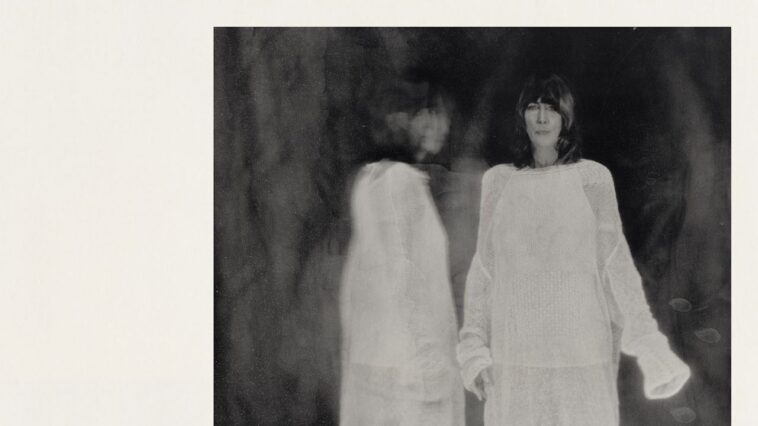
Thirty-three years into her career, Beth Orton is making some of the best music of her life. The one-time UK “comedown queen” followed her run of big-name rave collabs and beat-heavy folk-pop records in the ’90s and early ’00s with a restless decade or so, but it was on 2022’s Weather Alive that she really figured out how she should sound: expansive live arrangements instead of beats, crack session players instead of big-name producers. The precedent was David Bowie’s Blackstar and Kate Bush’s 50 Words for Snow—artists in high-priest middle age getting back in touch with their musicianship while remaining their imperious remove as auteurs, orienting their voice to come from the center instead of the front of their music and surrounding themselves with a jazzy tempest that stirred them to action.
The Ground Above, Orton’s first album since Weather Alive, is her first release to sound recognizably like the previous one since 2002’s Daybreaker. It’s her second self-produced album in a row, and it brings back a lot of the same players from the last one, including pianist Sam Beste, drummer Tom Skinner, and multi-instrumentalist Shahzad Ismaily. The list of new talent is just as impressive, including guitarists Leo Abrahams (Anohni and the Johnsons) and Adrian Utley (Portishead). The feel, live and snowy, is mostly unchanged from Weather Alive. But it’s a different kind of record, less ethereal, more grounded. Pitchfork’s Sam Sodomsky compared Weather Alive to Springsteen’s Nebraska as albums “defined by their atmosphere.” If we’re talking Bruce analogs, this one more easily brings to mind the craggy, live-in-the-studio approach of 2020’s Letter to You: technically flawless, never in a hurry, performed with ease befitting a veteran musician but burdened by the psychic and physical toll of aging.

No score yet, be the first to add.
“Time caught up with me,” Orton sings simply on “Cigarette Curls.” The singer has long lived with chronic health conditions, including Crohn’s disease and temporal lobe epilepsy, the latter of which is known to affect the voice. Her voice is even raspier and more cracked than on Weather Alive, but she uses it to her advantage, complementing the grain and grit of all those electric guitars and horns while cutting sharply through the ambient instrumental sections in which she allows her players to indulge for surprisingly long stretches. Her voice takes nearly 40 seconds to emerge on The Ground Above’s opening title track, and she kicks the album off with a hell of a first line: “I’m invincible as grief,” she sings, setting up the core dichotomy on these eight songs—the way Orton’s life as a wife, mother, and successful singer coexists with wounds that will most likely never heal.
“Motherhood is lonely,” Orton said in an interview around the time of Weather Alive. The subtext of The Ground Above is that married life can be lonely, too. She sings about love as a life-giving or sense-obliterating force: “You kissed me and I knew what I was for,” she sings on the title track, “and it wiped me out like chalk off of a board.” “For a life that’s cruel, you made it kind,” she sings on “Love You Right,” and it’s crucial that she talks about life’s cruelty in the present tense, something love can fight but not necessarily conquer. Sometimes she reaches into a spiritual or mythological plane for inspiration. The image of “the ground above” implies an underworld, and when she says she’s “as violent as a blade of spring released” on the same song, it’s difficult not to think of Demeter, the loneliest mother in the Greek pantheon. Like that goddess of the seasons, Orton howls from inside a squall.




GIPHY App Key not set. Please check settings