
A senior discusses weight-loss treatment options with a healthcare provider. Beginning July 1, some Medicare beneficiaries who meet specific BMI and health criteria may qualify for reduced-cost GLP-1 medications through the new Medicare GLP-1 Bridge program. KK Stock/Shutterstock
Beginning July 1, qualifying Medicare recipients will be able to take weight-loss drugs for $50 per month through the new Medicare GLP-1 Bridge program. However, most beneficiaries will not qualify. To see if you do, read on.
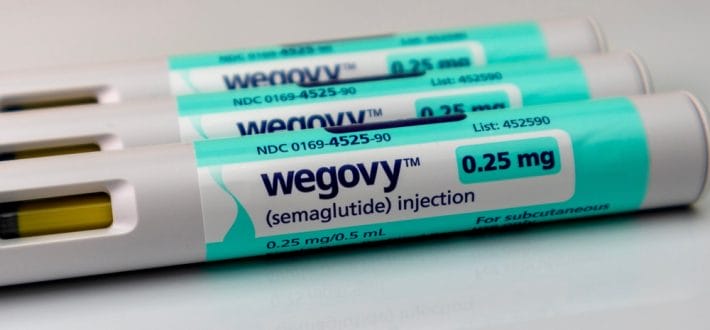
The drugs covered, Foundayo, Wegovy, and Zepbound KiwiPen, have not only helped patients shed pounds, but also helped them shed money. Prescriptions can run thousands of dollars a month.

Affordability and Health
“These treatments are a major medical advancement, but too many seniors are currently unable to access them due to high cost,” said CMS Administrator Dr. Mehmet Oz. “The Medicare GLP-1 Bridge changes that by making these medications more affordable and accessible, while advancing our broader goal of helping Americans live healthier lives.”
Whitney Stidom, vice president at eHealth, a consumer health insurance marketplace, is on board.
“For the over 60% of Americans 65 and older who are overweight or obese, GLP-1 drugs are a potential game changer,” reports Stidom. “But for many Americans, the high cost of these medications is a barrier to use, including limited access through Medicare plans.
“Recent research found that 50% of Medicare beneficiaries would be interested in taking GLP-1 drugs for weight loss if they were covered by Medicare, so it is likely that many enrollees will be interested in tapping into the new GLP-1 Bridge program.”
Common Misunderstandings
Dr. James Chao, MD, FACS, Chief Medical Officer and Co-Founder of VedaNu Wellness, says many people miss the fine print of the program.
“But here’s what people are missing,” Chao told SavingAdvice. “The savings apply to weight-management versions of the drugs (Wegovy, Zepbound), not the well-known diabetes-classified Ozempic or Mounjaro. Honestly, what trips people up is thinking that national headlines apply to them in the same way. Eligibility for this program actually hinges on whether your diagnoses and BMI qualify you.”
Who Qualifies for the Medicare GLP-1 Bridge
To be approved for the Medicare GLP-1 Bridge program, you must be enrolled in Medicare Part D or a Medicare Advantage plan that includes prescription drug coverage. However, you also need to meet these other criteria:
Your body mass index (BMI) is 35 or higher.Your BMI is 27 or higher, plus you have at least one qualifying health condition. Those include:Cardiovascular disease or history of stroke;Prediabetes;Hypertension uncontrolled by treatment; Advanced kidney disease;Heart failure.
Your BMI is a measurement of body fat derived from your height and weight.
Based on the program’s criteria, the Kaiser Family Foundation (KFF) estimates that only one in four Medicare beneficiaries will be eligible for the plan.
Prior Authorization Required
Approval for one of the covered weight loss medications is not automatic, even if you meet the program’s criteria. Your doctor must submit a prior approval application documenting that you meet eligibility requirements.
Part D plans sometimes require prior authorization, but only for high-cost, high-risk, or speciality drugs. Under those circumstances, the Part D insurer approves or denies such requests. The Bridge plan will send prior authorization applications through its designated processor, Humana, instead of Part D plans.
Certain conditions, typically treated with Bridge drugs, are not approved under the Bridge plan. The prior authorization form requires your doctor to deny coverage for patients with type 2 diabetes, obstructive sleep apnea, and noncirrhotic metabolic dysfunction-associated steatohepatitis (MASH)
“Beneficiaries with these diagnoses are eligible to receive GLP-1s through their Part D plan and therefore are ineligible to receive them through the Medicare GLP-1 Bridge, even if they otherwise meet the Medicare GLP-1 Bridge clinical criteria,” according to CMS’s provider site.
How These Changes Affect Out-of-pocket Costs
The $ 50-a-month payment for those who qualify will be a savings for most beneficiaries. Although that payment will not apply to your annual Part D deductible or the out-of-pocket cap, which is currently $2,100.
“However, that will feel in practice, it’s still an enormous savings for patients paying the full $975 to $1,050 retail price today,” notes Chao. “The caveat here is getting your medication approved before your current supply runs out. If you have a month of oral supplies left when you apply, for example, you’ll want to time refills so you use those up first.”
What If You Do Not Qualify for Medicare GLP-1?
For those without a Part D plan, there are still actions you can take to cut your costs.
“If you don’t qualify for Medicare’s Bridge, manufacturer savings programs still exist, as do options to switch to a different GLP-1 covered by your plan or talk to your doctor about cheaper alternatives,” said Chao. “None of those are guaranteed, and all of them depend on finding a medication you can take medically, which is why I’m leading with talking to your doctor. Specifically, if you’re close to the cutoffs for BMI or diagnosis, you may want a written record from your physician that you do or don’t qualify for Bridge before July 1, not a hurried conversation after.”
The GLP-1 Bridge Is Temporary
The Bridge program runs from July 1 through December 31, 2027. So, millions of seniors who started GLP-1 medications under the Bridge could be priced out of access after that.
The Bridge program is only a temporary stopgap. CMS is buying time to develop a permanent plan called the BALANCE Model (Better Approaches to Lifestyle and Nutrition for Comprehensive Health). The idea is that BALANCE will be in place by the first of 2028, permanently embedding GLP-1 coverage in Medicare.
The original attempt to launch BALANCE ended in April when the plan did not get the support of enough Part D health insurers. Many who declined to participate cited uncertainty regarding costs and the long-term side effects of the drugs.
Responding to the BALANCE proposal in December, the Alliance of Community Health Plans (ACHP) praised the use of GLP-1 drugs as part of a coordinated approach to weight loss. However, it had reservations about the CMS proposal.
“At the same time,” ACHP commented in a written statement, “research has raised concern about side effects, risks, and adherence. In several studies, patients stopped taking GLP-1s within the first year and, in the process, lost significant muscle mass.
“We appreciate the Administration’s commitment to this approach in the aptly named, voluntary BALANCE coverage model for GLP-1s in Medicare and Medicaid. We are eager to see additional details, including the cost to health plans.”
You May Have to Switch Part D Plans
Uncertainty around the continuation of the GLP-1 drug plan under BALANCE raises the possibility that a beneficiary could start using covered weight loss drugs in July and be forced off of them at the end of 2027. That could potentially lead to rapid weight regain, according to a report published by the National Institutes of Health.
Even if the BALANCE Model launches on schedule, you may have to switch your Part D coverage to qualify. It’s also important to note that there is no requirement that a Part D plan participate in BALANCE. Switching plans should be done with caution, because a new plan may not cover other drugs you take.
How Should Patients Prepare for July 1?
Chao recommends confirming with your doctor that you and your medications qualify for the Bridge plan. Some criteria can be tricky. For instance, Zepbound KiwiPens qualify, but other Zepbound formulations, such as vials and other pens, do not.
“Pull together your medical records. Make that doctor’s appointment before June ends,” says Chao. “Oh, and by the way, make sure your prescribing physician is ready to submit that prior authorization to the central CMS processor ASAP. Patients who do this will buy themselves weeks of flexibility while the remaining pharmacy and backend processes are ironed out.”
Are you currently taking a GLP-1, or are you looking to start one? How will the Bridge program impact your access to the medication? Share your thoughts in the comments below.
What to Read Next
Research Shows GLP-1 Weight-Loss Drugs May Weaken Bones — What Older Adults Should Ask Their Doctor
GLP-1 Coverage Update: How Medicare’s New Transitional Policies Could Lower Out-of-Pocket Costs for Weight-Loss Medications
GLP-1s Now Linked To Lower Risk Of 4 Different Cancerous Tumors

Max K. Erkiletian is a seasoned journalist and analytical reporter with nearly 40 years of experience. He has been nominated for several honors and was part of a team that won the Missouri Press Association’s Community Service Award.
His experience has included covering a wide range of topics, from crime reporting to politics and music. His interview subjects have included U.S. Senators, such as Tom Eagleton; economists, such as Arthur Laffer; former Fed Chair Paul Volcker; and musicians, such as Muddy Waters and B. B. King.
Today, he focuses on personal finance, consumer protection, economic shifts, and investment trends. His reporting aims to make complex issues understood and show how events impact consumers’ wallets.




GIPHY App Key not set. Please check settings