
Joe Maring / Android Authority
Doomscrolling is a concept we are all very well-acquainted with. Netflix might have a seemingly endless list of movies to offer, but actually finding one that you want to watch always feels completely out of reach. All too often, I find myself sitting on the couch, remote in hand, trying to figure out what to watch while the evening wastes away. The paradox of modern streaming is that the more choices we have, the harder it becomes to settle on anything, turning what should be a relaxing evening into a tedious exercise in decision paralysis. Me? I usually end up on YouTube. But I digress.

After spending a week letting a chatbot dictate my evening TV watching, I’m convinced this is the future of streaming on Google TV.
Recently, I was pitched an interesting solution to exactly this discovery problem by Indian hardware upstart, Lumio. Dubbed Project Neoit is an experimental AI agent designed to bridge the gap between the devices we use to discover content and the screen we watch it on. And the best part is that it does this using apps you use every day.
By connecting an AI agent directly to your Google TV through WhatsApp and Instagram, Project Neo promises to take the friction out of the living room entertainment equation. After spending a week letting a chatbot dictate my evening viewing habits, I am convinced that this approach to content discovery is exactly what the smart TV ecosystem has been missing. More than that, though, it might be one of the smartest use cases of AI I’ve come across recently.
How do you pick out what to watch?
25 votes
I scroll through streaming apps.
68%
I ask friends or social platforms.
20%
I search Google.
12%
I let AI tools make the choice for me.
0%
Smart TVs still don’t understand what you want to watch
Joe Maring / Android Authority
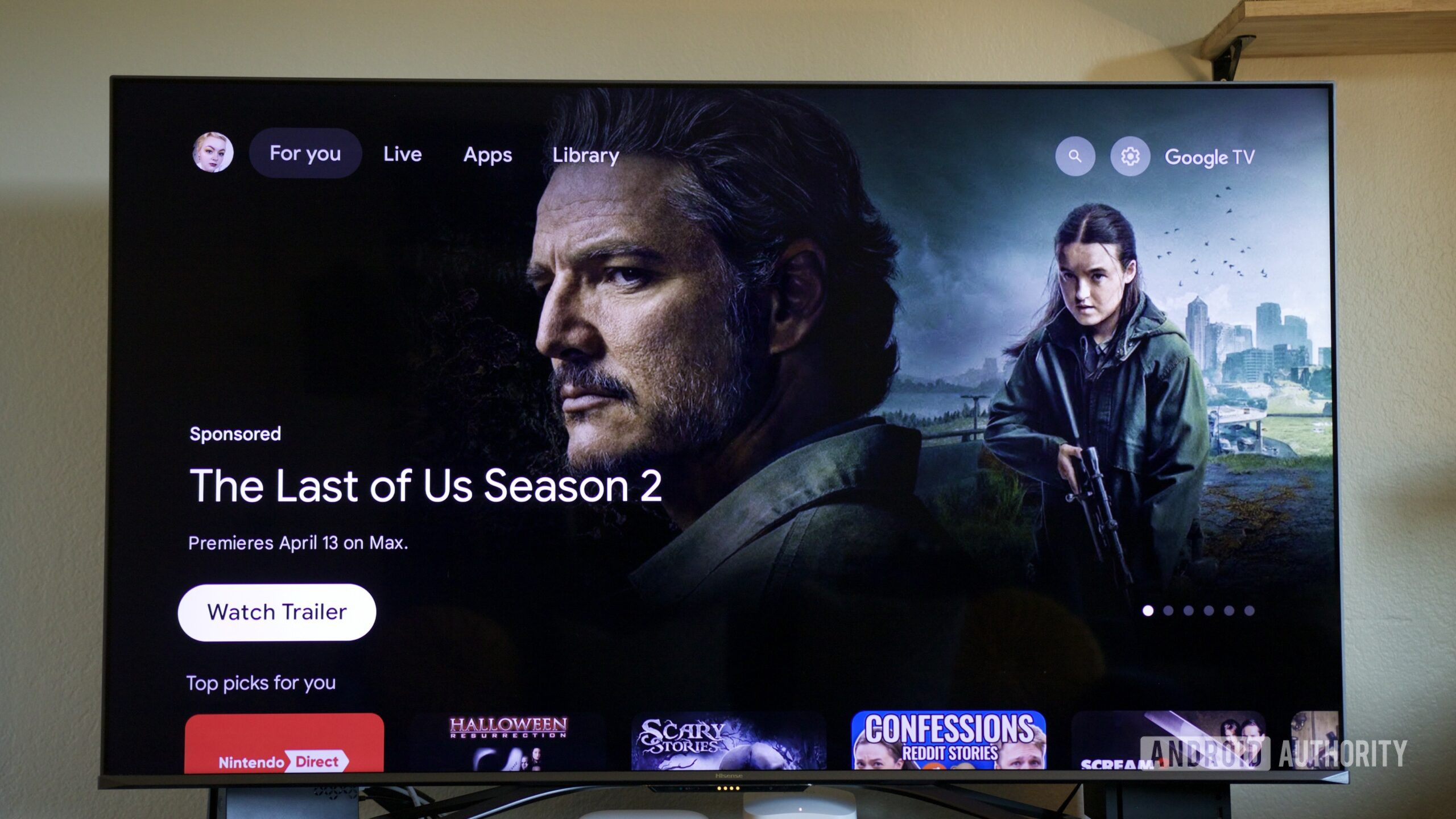
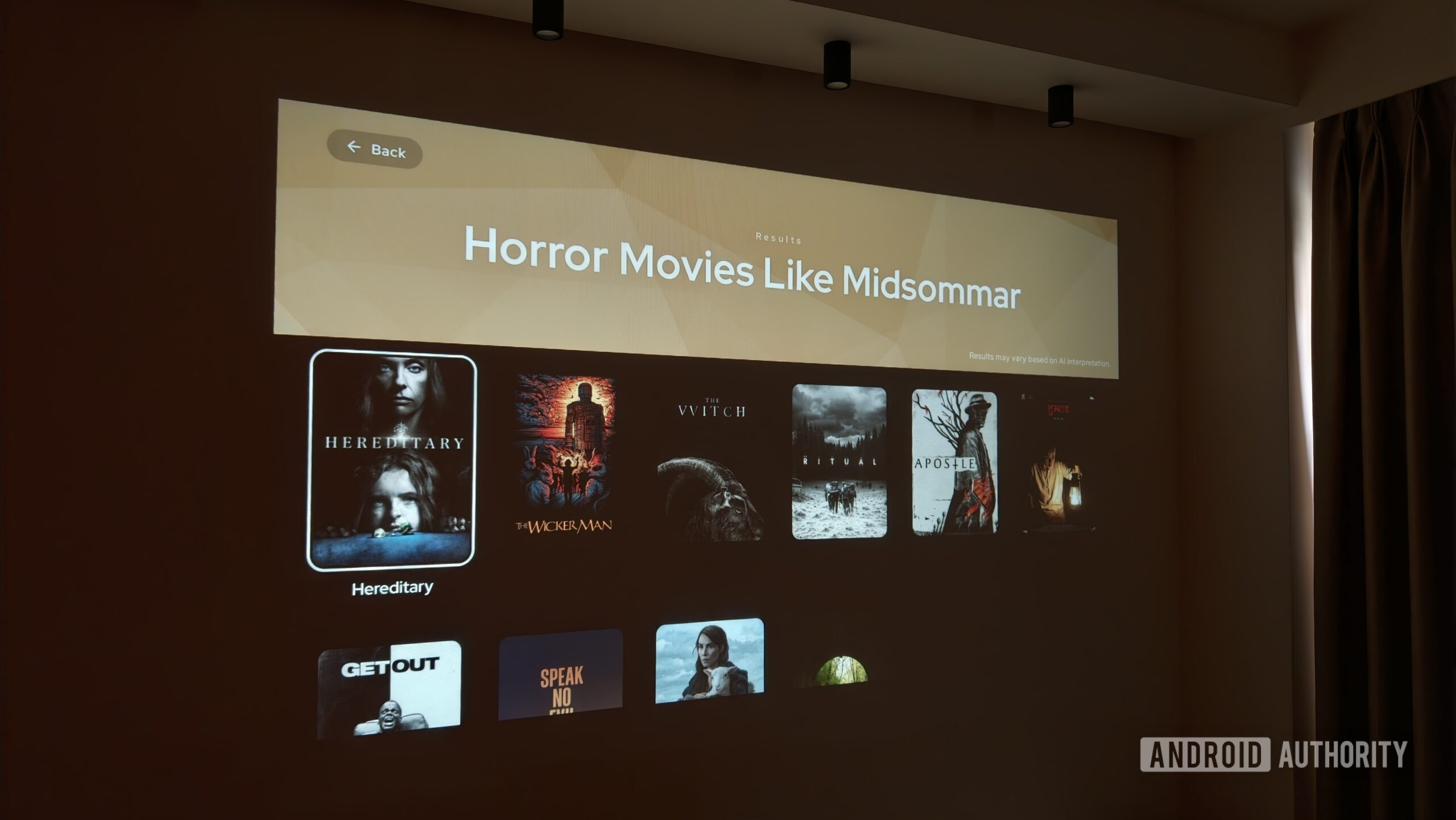
The biggest flaw with modern smart TV platforms is that content discovery is broken. The second biggest flaw is that it is still largely genre-dependent. There’s a lack of nuance and understanding that a masterful horror movie like Midsommar has more in common with the British classic The Wicker Man and less so with whatever schlock horror Netflix is peddling today.
Streaming interfaces are designed to maximize engagement time, and users are expected to browse dense grids of promotional tiles, watch auto-playing trailers that we did not ask for, or scroll through multiple menus using a remote that hasn’t changed much over the last few decades. This ignores the fact that discovery happens on our smartphones, through forums like Reddit, and social platforms like Instagram.
Because our discovery habits are entirely mobile, it’s a challenge to translate that discovery to the big screen. If a friend texts you a recommendation for a movie, you have to remember the title, figure out which streaming app it is on, pick up your remote, open the app, and manually type out the name of the movie or use the oft-broken voice search. Google Assistant can help reduce some of this friction, but in my experience, it fails more often than not.
Recommendations that actually make sense
Dhruv Bhutani / Android Authority
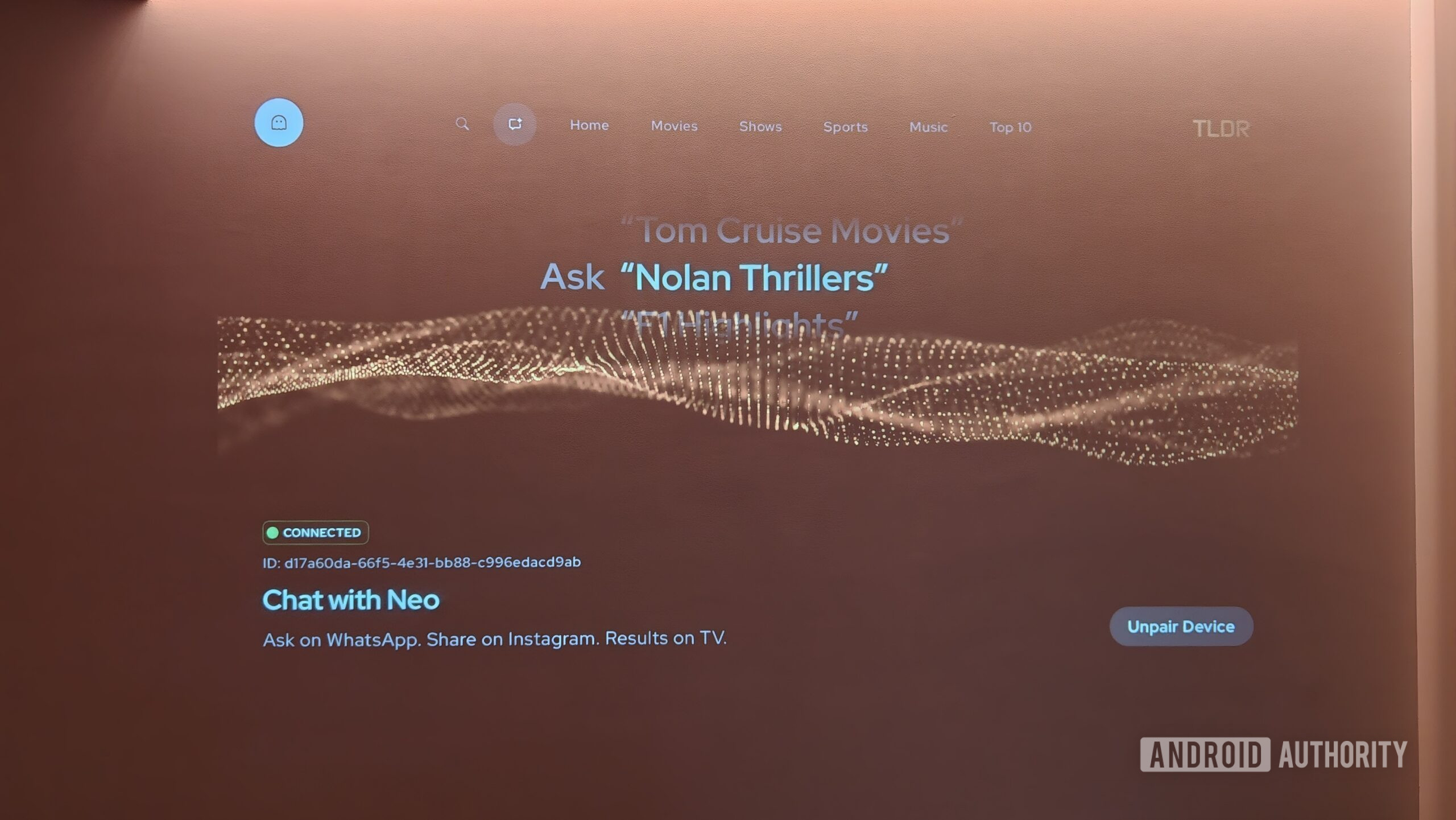
Project Neo flips this dynamic on its head by moving the entire discovery process back to the smartphone, utilizing an interface that everyone already knows how to use. The system relies on a companion app running on the television called TLDR. You then follow a fairly standard QR code-based pairing process that connects a WhatsApp chatbot to your account. That’s it. You can now chat directly with the bot, using both text and voice input, and it becomes a conversational input device for your television.
Project Neo brings TV discovery to the one interface everyone already knows how to use.
The beauty of this integration is the simplicity. Users don’t need a new app on their phone. Project Neo brings the input to where you already are. No need for casting or switching between screens. Just enter the name of whatever piece of content you want to watch, and TLDR will pull it up on screen. From there, just tap the thumbnail, and, as long as you’re signed into the service, it’ll pull up the movie. If you’re not, it’ll still tell you which service the piece of content is available on, alongside beautiful metadata including posters, banner images, and a short summary. You’ll even find cast information.
Dhruv Bhutani / Android Authority
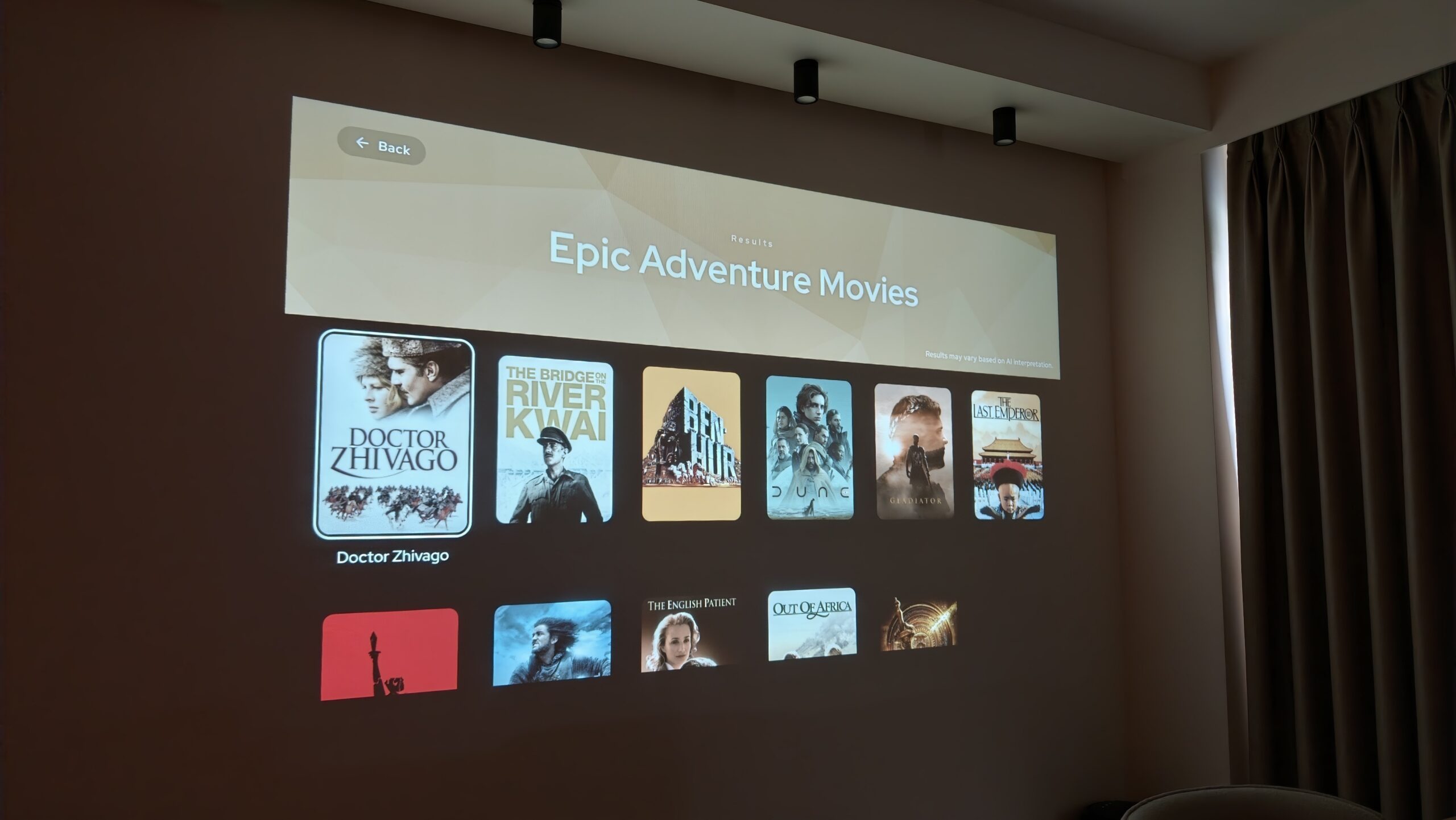
The functionality goes well beyond just a smartphone-based media launcher, of course. There’s a surprising number of features built in here — including a full-blown recommendation engine. And that’s where the AI smarts start showing up. During my testing, I asked it for recommendations for movies similar to the classic epic adventure Lawrence of Arabia, and it pulled up spot-on recommendations like Ben-Hur and The Last Emperor.
The actual experience of using Project Neo feels incredibly fluid in practice. Instead of hunting for a specific title, you can talk to the WhatsApp bot exactly as you would talk to a friend, thanks to its support for slang and abbreviated communication. You can ask the bot to pull up something as basic as trending movies or something as complex as a non-obvious, neo-noir crime thriller from the ’90s with high ratings and featuring at least one Oscar-nominated actor. Suffice it to say, it gave me solid recommendations right up on my projector screen. You can even follow it up with additional queries like filtering out movies longer than 90 minutes. Pretty cool.
If you don’t feel like typing, you can send a voice note to the bot, and it’ll handle the requests just fine. Moreover, the requests aren’t limited to just cinema. You can search for movies, music videos, and sports scores. For the latter, the TV displays title cards with game highlights, but so far lacks the ability to drop you into an ongoing match.
Bringing social recommendations to the big screen
Dhruv Bhutani / Android Authority
Beyond standard text queries, Project Neo addresses another massive disconnect in the modern living room by integrating social media links into the television experience. A lot of my discovery today happens through Instagram. I’ve got a collection full of interesting world cinema to watch. But that’s the problem with Instagram; that collection languishes on the platform because I forget to check it any time I’m looking for a fresh watch.
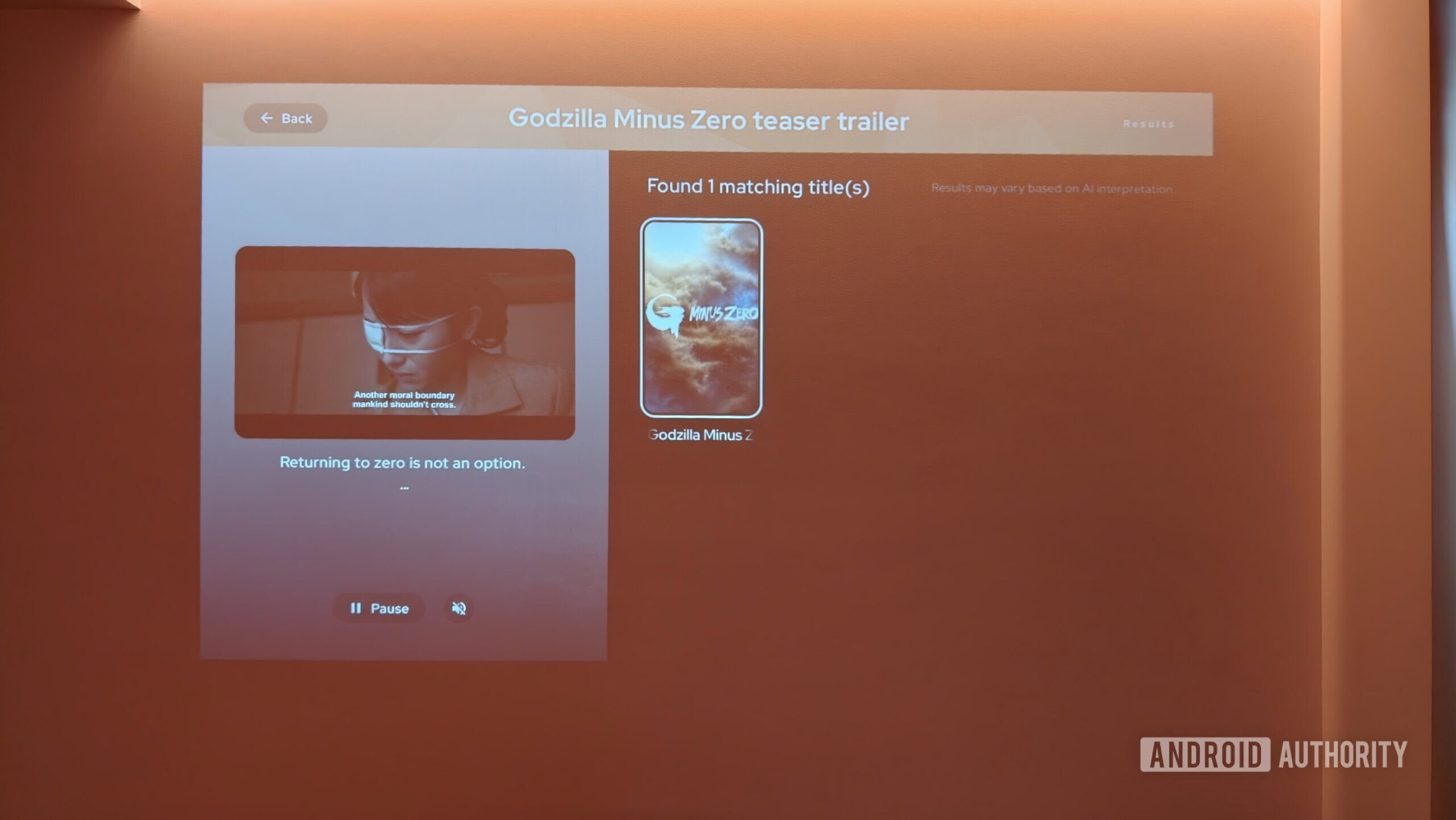
With Project Neo, you can link your Instagram account to the platform. Any time you forward an image or a reel to the bot, it parses your request and pulls up the recommendation straight on your TV. I tested it out with a trailer for Godzilla Minus Zero, and not only did it start playing the trailer on the TV, but it also pulled up a card for the movie, allowing me to add it to a watchlist.
Bridging the gap between social-first content discovery and watching it on your TV.
That ability to pull up Instagram Reels on your big screen has other benefits, too. All too often, I watch a funny clip on social media that I want to share with friends on the big screen. I’ll usually look for it on YouTube, and if I can’t find it, my next option is mirroring my phone’s screen to the big screen. With Project Neo, I can just forward that Instagram Reel, and it starts playing the video through my Lumio projector. It’s much better than awkwardly passing my phone around or having notifications pop up while I’m screen mirroring.
An ambitious glimpse of the future
Dhruv Bhutani / Android Authority
For as good as it is, it’s worth noting that Project Neo is still very much an early-stage beta with some limitations. It can launch videos via many popular apps, but not every app. That’s more to do with the locked-down nature of Google TV, but it remains a noteworthy limitation. Often enough, you’ll still have to manually launch the recommended movie or show.
Elsewhere, the AI-powered bot can occasionally become so slow that you’re left wondering whether it’s working at all. It wasn’t a common occurrence, but it did happen more than once.
There’s also the fact that the companion app is exclusive to Lumio TVs and projectors. I understand why the company wants to use it to enhance the value of its own hardware, but it also feels like a missed opportunity. Bringing it to the Play Store could make it a compelling reason for people using competing hardware to consider the Lumio ecosystem.
And finally, the elephant in the room — Gemini for TV is poised to bring a very similar AI-powered experience to all televisions. The only caveat is that there is no true timeline for broad availability. That said, the WhatsApp and Instagram chat-based interface is a true innovation, and something Gemini for TV doesn’t offer. And it is something worth cribbing for the benefit of the broader ecosystem.
Google needs to crib this playbook
Dhruv Bhutani / Android Authority
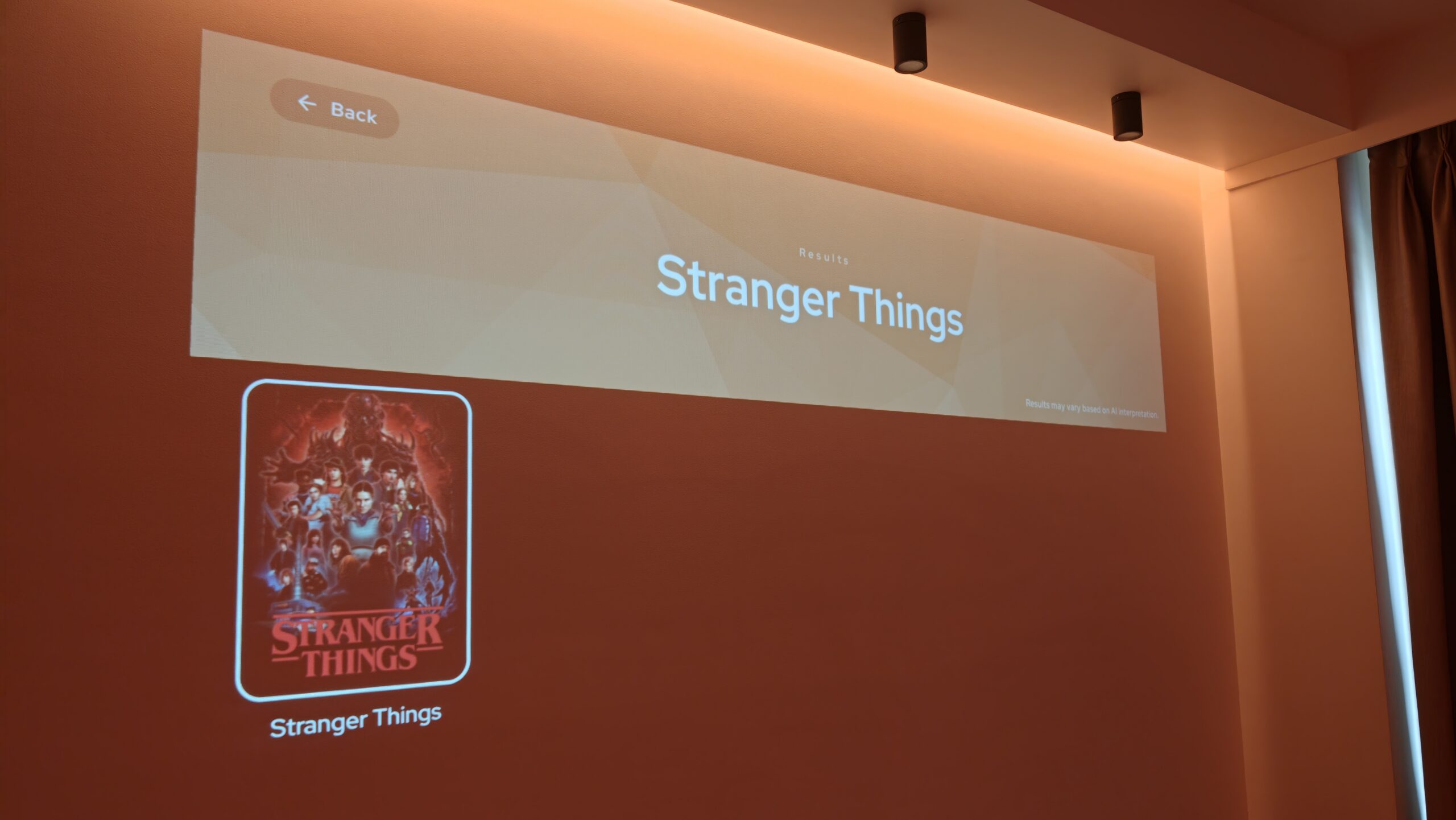
The philosophy behind what Lumio has built represents the exact evolution that Google TV needs to take. Google already owns all the pieces necessary to build an experience like this natively, and it could do it on a scale that a small startup simply cannot match. Based on what I’ve seen of Gemini for TV so far, it appears that Google does much of the same.
A compelling glimpse of where TV interfaces are headed.
However, if Google were to integrate a conversational, smartphone-linked AI discovery engine natively into the TV experience, complete with social linkages, well, that would be, for lack of better words, a true game changer.
A native solution would completely eliminate the deep-linking hurdles that plague Project Neo or any similar app, allowing the AI to not only find a movie but also instantly start playing it across any service, and make the remote or the so-far rather poor voice-based interactions things of the past. Project Neo proves that natural language and the smartphone keyboard are the ultimate tools for content discovery, and Google should absolutely build on this future as we head into the next generation of Google TV.
Thank you for being part of our community. Read our Comment Policy before posting.




GIPHY App Key not set. Please check settings