
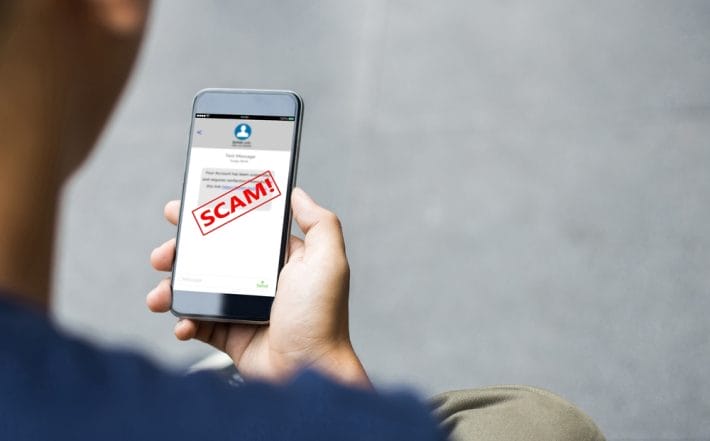
NHTSA warns that it never issues traffic tickets or demands payment by text, phone call, or email. Unexpected citation messages should always be verified independently. panuwat phimpha/Shutterstock
The rise of scams when it comes to tickets, toll fees, and other road-related charges has become alarming in recent years. People check their text messages, only to find a note claiming that they owe money for an unpaid traffic ticket. In a rush to make things right, many people just click on the link and settle the payment, without thinking to double-check the legitimacy of the claim. And scammers count on that.
Recently, the National Highway Traffic Safety Administration (NHTSA) issued a public warning about a wave of impersonation scams. One thing remains true: the NHTSA will never contact any member of the public demanding payment for a traffic violation. Here’s what you need to know about these growing scams and how you should handle them when you receive one.

NHTSA Does Not Issue Traffic Tickets
First and foremost, the NHTSA is not a traffic enforcement agency. The NHTSA is a federal agency that focuses on vehicle safety. According to NHTSAit does not issue traffic citations and will never text, call, or email members of the public about traffic violations or unpaid fines. Traffic tickets are issued by state and local law enforcement agencies, courts, and government entities, not by NHTSA. Scammers are exploiting the agency’s official-sounding name to make fraudulent messages appear legitimate.
Scammers also rely on creating an immediate sense of danger. Scam texts and calls often claim your driver’s license will be suspended, a warrant will be issued, or additional penalties will apply unless payment is made immediately. Official guidance from the Federal Trade Commission warns that scammers frequently rely on fear and urgency because frightened consumers are more likely to act without verifying information.
These messages may include fake case numbers, court references, or official-looking seals to increase credibility. If a message pressures you to act right away, that’s often a sign to slow down and investigate further. Here are a couple of other red flags to keep an eye out for.
Suspicious Payment Requests Are a Major Red Flag
Legitimate government agencies generally follow established procedures when collecting fines and fees. Scammers often demand payment through unusual methods such as gift cards, cryptocurrency, wire transfers, prepaid debit cards, or digital payment apps. These payment methods are attractive to criminals because transactions are difficult to reverse. A text demanding immediate payment through one of these channels should raise serious concerns.
Never Click Links or Scan QR Codes in Unsolicited Messages
Many traffic-ticket scams are designed to steal information rather than collect fake fines. There has been a surge in scam texts that include QR codes or links directing recipients to fraudulent websites. These sites often resemble government webpages and may ask for Social Security numbers, driver’s license information, bank account details, or credit card numbers. In some cases, clicking the link may expose devices to malware.
Verify Any Citation Directly Through Official Channels
If you’re concerned that a ticket might actually be legitimate, don’t rely on the information provided in the message. Instead, contact the appropriate court, local law enforcement agency, DMV, or traffic authority using contact information you obtain independently. NHTSA recommends verifying vehicle-related information directly through official government websites and trusted sources.
Even if you caught it and didn’t lose any money, it’s important to report these scams. Doing so can help authorities identify trends and warn the public. You should report impersonation scams to local law enforcement, state consumer protection agencies, and the Federal Trade Commission. The FTC’s ReportFraud portal collects information that can help investigators track emerging schemes. A report that seems minor today could help prevent others from becoming victims tomorrow.
Have you ever received a suspicious text or phone call claiming you owed money for a traffic violation? Share your experience in the comments below.
What to Read Next
Americans Lost $3.5 Billion to Impersonation Scams Last Year—What to Say When a Caller Claims to Be From Your Bank
5 Financial Scams Targeting Seniors Right Now That Often Begin With a Text or Phone Call
7 Scams Draining Retirement Savings Right Now — Including the New ‘Social Security Verification’ Scheme

Drew Blankenship is a seasoned personal finance and lifestyle writer with more than a decade of professional writing experience crafting clear, actionable advice that helps savers and investors over 40 protect their wealth and make smarter everyday decisions. His bylines appear regularly on SavingAdvice.com, CleverDude.com, and other respected outlets, where he draws on deep industry knowledge to deliver practical insights on cost control, smart spending, and long-term financial security.




GIPHY App Key not set. Please check settings