
In the dead of night, on a Japanese survey ship, lawmaker Tomomi Inada faced an intense moment.
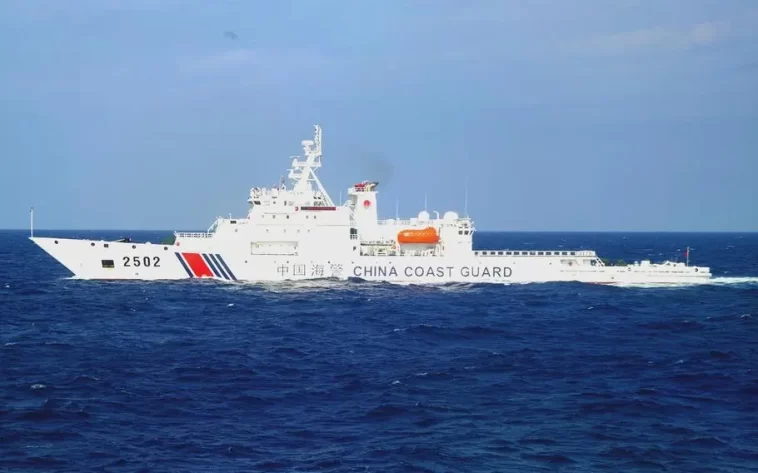
A Chinese coast guard vessel closed in, blaring over the loudspeaker that the Japanese were trespassing in Chinese waters near the disputed Senkaku Islands.

This incident is just one in a series where China’s maritime assertiveness is becoming more visible and controversial. China asserts control over various strategic maritime points in East Asia.
These include Japan’s Senkaku Islands, the Scarborough Shoal near the Philippines, and Taiwan’s Kinmen Islands—all key parts of the “First Island Chain.”
This concept is critical to understanding China’s actions, as it forms a line of coastal defense against any naval approach from the Pacific.
 Sea of Dispute: China’s Naval Encroachments Alarm Neighbors. (Photo Internet reproduction)
In 2023, tensions escalated, with China deploying a record 1,287 ships near the Senkakus.
This is part of a broader strategy where China uses “gray zone” tactics. These measures intensify pressure without sparking an outright war.
Simultaneously, the Philippines grapples with its own set of challenges. One striking incident involved a Chinese vessel firing water cannons at a Filipino boat near Scarborough Shoal.
This location has witnessed repeated confrontations, underscoring the volatile dispute over maritime boundaries.
Rising Tensions Near Taiwan
Near Taiwan, the stakes are similarly high. Chinese patrol boats have intensified their presence around Kinmen, only kilometers off the Chinese mainland.
This upsurge in military and coast guard activity marks a significant shift from decades of relative calm, igniting fears of a possible serious escalation.
Observers like John Dotson of the Global Taiwan Institute and Collin Koh of the S. Rajaratnam School warn that the region is teetering on a fine line.
While no one expects an imminent war, the unpredictability of these disputes means a small spark could ignite a larger crisis.
Amid these tensions, calls for strategic cooperation have grown louder. Nations such as the Philippines, Japanand the U.S. are urged to collaborate more closely to uphold stability.
This collaboration aims to prevent any forceful change in the status quo by Beijing.
This delicate balancing act is crucial, not only for regional peace but also for the stability of global maritime routes that are vital for international trade.




GIPHY App Key not set. Please check settings