
Brazil just got three clear signals from very different corners of its economy. Sabesp, São Paulo’s water and sanitation utility, is investing aggressively through a drought and still holding margins.
JSL, a nationwide logistics operator, is reshaping itself to defend profitability after growth-driven strain. Azzas 2154, the newly merged fashion group behind labels from Hering to Farm, is proving it can lift profits while stitching two companies together.

The common thread: execution over spectacle, with each management team preparing its balance sheet and operating model for a tougher but opportunity-rich 2026.
Sabesp — Water Utility, São Paulo State
What it does: Provides water and sewage services across São Paulo state.
The story: Sabesp posted adjusted net income of R$ 1.28 billion ($237 million), up 9.5% year on year, and adjusted EBITDA of R$ 3.2 billion ($593 million) with a 58.6% margin.
Revenue was essentially flat at R$ 5.46 billion ($1.01 billion), pressured by a 3.3% decline in average tariffs and a R$ 108 million ($20 million) FAUSP provision.
Post-privatization efficiency is doing heavy lifting: costs and expenses fell nearly 16% to R$ 2.26 billion ($419 million), with a quarterly year-over-year cost reduction of R$ 414 million ($77 million) and R$ 1.558 billion ($289 million) in savings over nine months versus 2024.
Even amid regulator-mandated pressure reductions to protect strained reservoirs, Sabesp is leaning into capex—R$ 4.0 billion ($741 million) in the quarter and R$ 10.43 billion ($1.93 billion) year-to-date—to secure supply and hit universalization targets.
It closed September with cash of R$ 11.6 billion ($2.15 billion) and net debt/EBITDA of 1.9x. The read-through: a utility using privatization gains and balance-sheet space to invest precisely when weather risk is highest—an execution test, but also a moat-builder.
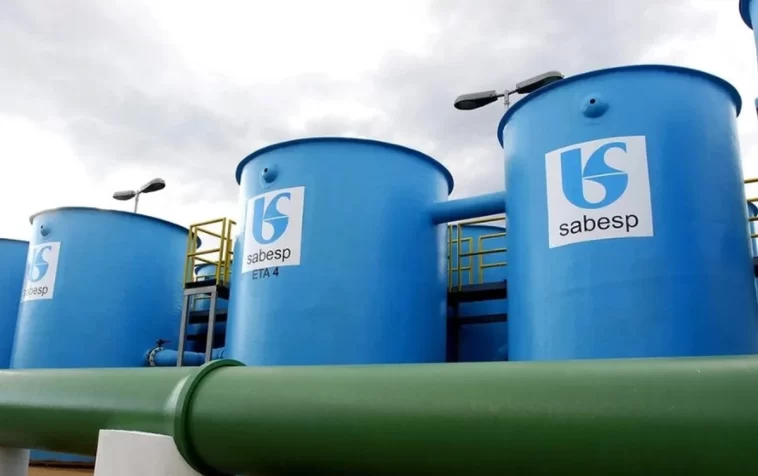
 Sabesp, JSL, And Azzas 2154: Three Different Ways Brazil Is Trying To Make 2026 Work. (Photo Internet reproduction)
JSL — Logistics And Contracted Transport, Nationwide
What it does: Dedicated transportation, intralogistics, warehousing, and digital freight matching.
The story: JSL’s adjusted net income fell 50.7% to R$ 35.8 million ($7 million) despite a 13% rise in adjusted EBITDA to R$ 526 million ($97 million) and a 5.6% revenue increase to R$ 2.5 billion ($463 million), fueled by contracts launched in the first half.
Management’s response is structural: three focused units—Serviços Dedicados (about 75% of revenue), Intralog (warehousing/intralogistics), and JSL Digital (platform linking cargo and independent drivers).
The pivot aims to sharpen pricing, capital allocation, and service intensity by end-market. The read-through: growth is intact, but returns need defending; segmentation is the bet to translate operating scale into steadier margins and cash conversion.
Azzas 2154 — Fashion And Lifestyle Platform
What it does: Multi-brand retail and wholesale formed by the Arezzo&Co–Grupo Soma merger.
The story: Recurring net income rose 23% to R$ 201.3 million ($37 million), while recurring EBITDA held roughly flat at R$ 476.7 million ($88 million).
That mix says integration discipline: the group is balancing portfolio execution, store productivity, and supply-chain timing while consolidating systems and teams.
With brands spanning mass casual to premium lifestyle, the task is to convert cross-selling, sourcing synergies, and design cadence into durable margin without diluting identity.
The read-through: proof points on synergies are emerging; sustaining them across seasons and channels will determine how much of the merger’s promise turns into return on capital.
Bottom line
Sabesp is building resilience through capex and cost control; JSL is rebuilding its operating chassis to protect returns; Azzas 2154 is turning integration into earnings momentum. Different plays, same goal: entering 2026 with stronger, simpler engines.



GIPHY App Key not set. Please check settings