
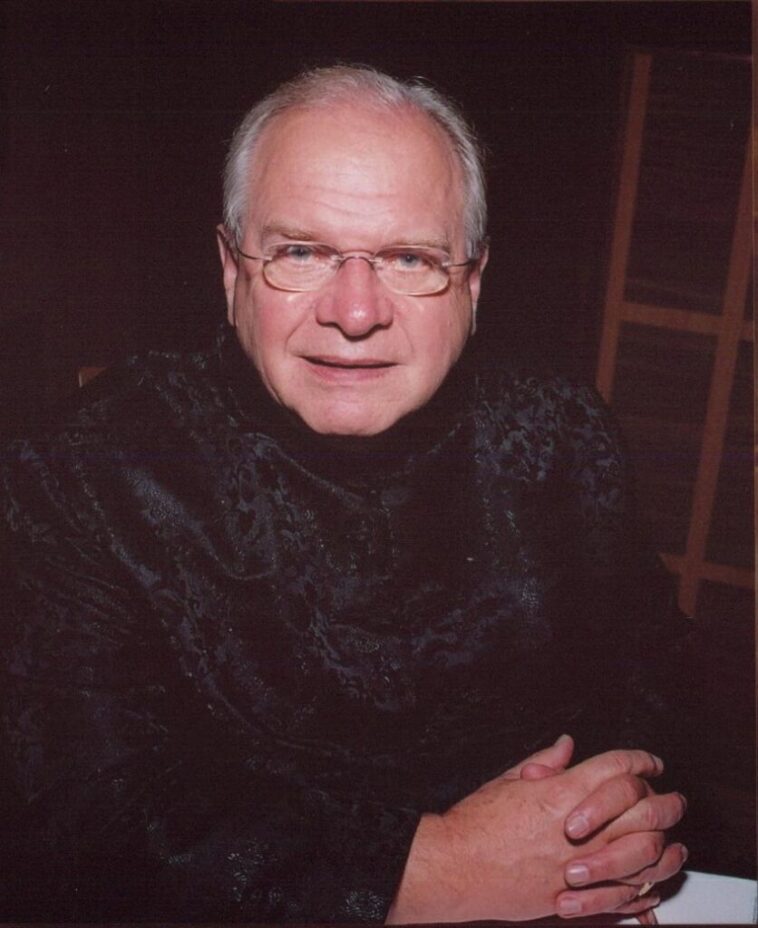
Ben Stevenson, the former longtime artistic director of Houston Ballet and Texas Ballet Theater, passed away on March 29, just a week shy of his 90th birthday. He leaves behind a legacy that feels like a multitude of lifetimes.
“He did some film and danced for kings and queens,” says former Houston Ballet principal dancer Lauren Anderson. “He choreographed for and danced with Margot Fonteyn, taught (actress) Jane Seymour, was friends with Liza Minnelli and Judy Garland. He has created countless ballets that people are still doing all over the world.”

“He was a giant in dance,” says Texas Ballet Theater principal dancer Andre Silva. “I pretty much see him right next to Balanchine—Ben is ballet.”
British Beginnings
Born in Portsmouth, England, Stevenson trained at London’s Arts Educational School and joined Sadler’s Wells Royal Ballet (now The Royal Ballet) in the mid-1950s. He later moved to London Festival Ballet (now English National Ballet), where he became a principal dancer and started choreographing. While there, he staged his first major production, The Sleeping Beauty, in 1967. During this period, he also performed in musical theater productions, like The Music Man, in London’s West End. Stevenson came to the U.S. in 1968 to direct Harkness Youth Dancers in New York City.
In 1971 he became co-director of the National Ballet in Washington, D.C., where he had choreographed his still-popular Cinderella the year before. (His Sleeping Beauty was performed at The John F. Kennedy Center during its inaugural season.)
Establishing Roots in Texas
In 1976, Stevenson was named artistic director of Houston Ballet. Over the next 27 years, he turned the small troupe into a major American company and choreographed a large repertoire of ballets. Under his leadership, the Houston Ballet Academy—renamed the Ben Stevenson Academy in 2003—grew and trained generations of notable dancers, including Anderson. Stevenson also brought in talent, such as principals Janie Parker, Carlos Acosta (who danced in Houston for five years before moving to The Royal Ballet), and Li Cunxin, author of Mao’s Last Dancer.
In 1978, Stevenson started a multi-year cultural exchange with China, where he first discovered Cunxin as a student. Stevenson was later named an honorary faculty member at the Beijing Dance Academy. In 1995, he led Houston Ballet’s historic tour of China, the opening night of which was televised to more than 500 million viewers.
Ben Stevenson. Photo courtesy The Ben Stevenson Trust.
In 2003, Stevenson became artistic director of Texas Ballet Theater, bringing his acclaimed productions of Swan Lake, Romeo and Juliet, Cinderella, and Dracula to its repertoire. He held the position for nearly 20 years, becoming artistic director laureate in 2022, and continued to guest teach and coach there.
Stevenson was named an Officer of the Order of the British Empire (OBE) by Queen Elizabeth II in 1999. He received a Dance Magazine Award in 2000, the 2005 Texas Medal of Arts, and was recognized by the Chinese government in 2018 as an influential foreign expert during the country’s Reform and Opening Up policy.
A Master Storyteller
Those who danced for Stevenson recall his in-studio process and remarkable ability to tell a story onstage. “You think about ballet being, in some ways, so regimented and technique-driven,” says former TBT dancer Justin Urso, who is now the business manager of the Ben Stevenson Trust. “But the bulk of Ben’s time, when working with the company, is about where (the story) is coming from and the emotion and the why behind everything.”
Dominic Walsh, a former Houston Ballet principal and current artistic director of Oregon Ballet Theatre’s second company, agrees. “I remember him saying, ‘It has to mean something,’ ” says Walsh. “That pirouette has to be an expression of this sensation that you feel. He was a master of sensation, of movement.”
The result are works that are relatable, organic, and deeply authentic, including Stevenson’s own favorite, Peer Gynt. “Of course, he cared about technique. But artistry was his main focus,” says Silva.
Every dancer’s role onstage mattered too, Urso adds. “He used to say to us, ‘The work that the principals are doing in front doesn’t mean anything if the corps de ballet is just standing around on the sides.’ ”
Developing Artists
While Stevenson’s artistic legacy is clear, he was equally known as a mentor.
“Ben had a way of seeing something in people that they don’t see in themselves,” says Michigan-based ballet, Pilates, and Gyrotonic teacher Carolyn Judson, who studied for two years at Houston Ballet’s Ben Stevenson Academy before joining TBT, where she rose to principal dancer.
 Former Houston Ballet principal dancers Lauren Anderson and Carlos Acosta with Stevenson in rehearsals for his Dracula. Photo by Jann Whaley, courtesy Houston Ballet.
Lauren Anderson recalls being cast in his Alice in Wonderland as a student at the Academy: “Ben was a man that, in 1979, made Alice a little Black girl. He never ever made me think that I couldn’t do it, anything. He made everything possible in the studio.” Under Stevenson, Anderson became Houston Ballet’s first Black principal dancer in 1990, a major milestone in American ballet. He would create his blockbuster production of Cleopatra on her in 2000. “He let you be yourself so the art can come through,” she says.
Urso adds that Stevenson identified qualities in dancers that he could nurture beyond their physicality. “I think that that is one of the most important pieces of why Ben was able to generate the type of dancers that he did, but also the community, the love, the people who believe in him because he believed in them.”
A Lasting Legacy
For many whose lives he touched, Stevenson was much more than a renowned dance leader. “For me, he is a teacher, director, mentor, uncle, father, friend, travel companion, concertgoer, trouble in a grocery store,” Anderson says. “I’ve celebrated all of my big milestone events in my life with him.”
“My kids even call him Grandpa Ben,” says Judson.
“(I feel) profound gratitude for being able to work with him at the time and the place where we worked together as dancer, mentor, and director,” says Walsh. “And just extraordinary gratitude for how that personal and artistic relationship flourished over the years.”
At 89, Stevenson was still actively teaching and coaching, particularly at TBT, where he was working with dancers on his Swan Lake just weeks before his death. (The new Texas Ballet Theater Ben Stevenson Campusopening this spring in Fort Worth, is being named in his honor.) “It was just fascinating to see him at nearly 90 years old, still coming in the studio, teaching a class, putting a smile on your face, inspiring you and giving you things to think about,” Silva says. “Reminding you about the essence and foundation of what dance, of what ballet, is really about.”
The post Remembering Ben Stevenson, 1936–2026 appeared first on Dance Magazine.




GIPHY App Key not set. Please check settings