
The World Cup started last week, on June 11, 2026: Mexico opened the tournament at the Azteca Stadium in Mexico City against South Africa and won 2-0. The 2026 World Cup will take place in three countries for the first time: Mexico, USA and Canada.
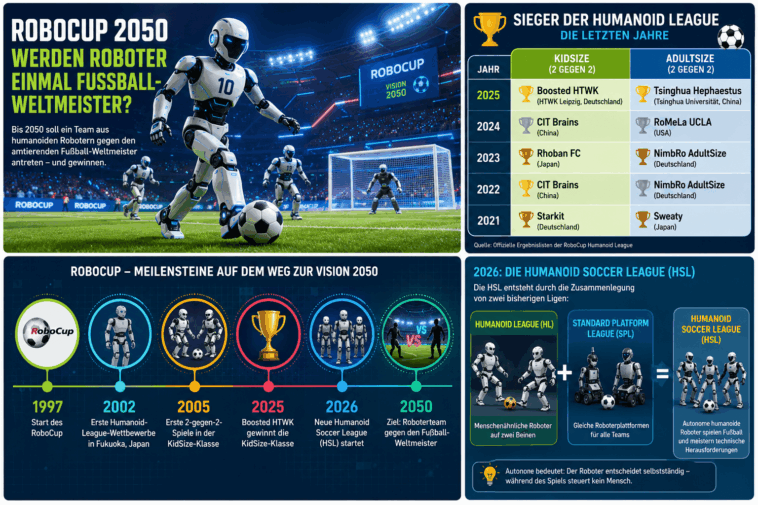
While the best footballers in the world fight for the cup, the RoboCup pursues its own goal: by 2050, a team of humanoid robots should compete against the reigning human football world champions – and win.

Sounds like science fiction? That’s exactly why it’s so exciting.
How did it all start?
The RoboCup was founded in 1997. His big vision: Robots should not just roll around under remote control, but also see, think, run, pass and score goals independently.
The Humanoid League, the competition for human-like robots, was added later. Her first competition was in Fukuoka, Japan in 2002. Back then, the goal was extremely bold: to build a robot that could walk on two legs and play football. In the first few years there were more tasks such as balancing, penalty shootouts or short demonstrations. Proper 2v2 games in the KidSize class were introduced starting in 2005.
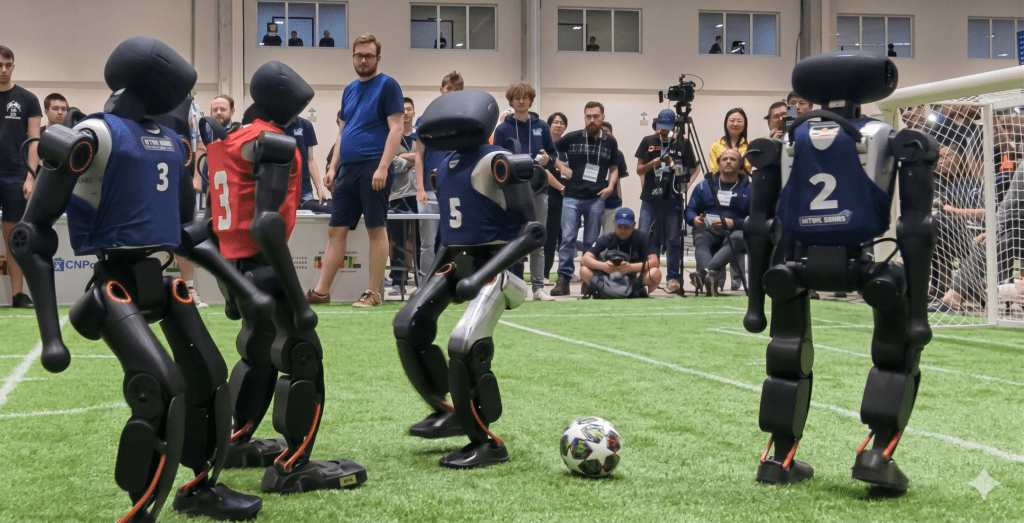
Football is a perfect endurance test for robots: They have to recognize the ball, understand their place on the field, work together with other robots, not fall over and adhere to the applicable rules.
Where will we be in 2026?
Humanoid robot football has been around for over 20 years. The new Humanoid Soccer League, HSL for short, has been around since 2026.
This HSL is created by merging the former Humanoid League and the Standard Platform League. It will take place in this new form for the first time at RoboCup 2026. In the HSL, fully autonomous humanoid robots play football and also compete in technical challenges.
“Autonomous” means: no human controls the robot during the game. The robot decides for itself where to run, when to shoot and who to avoid.
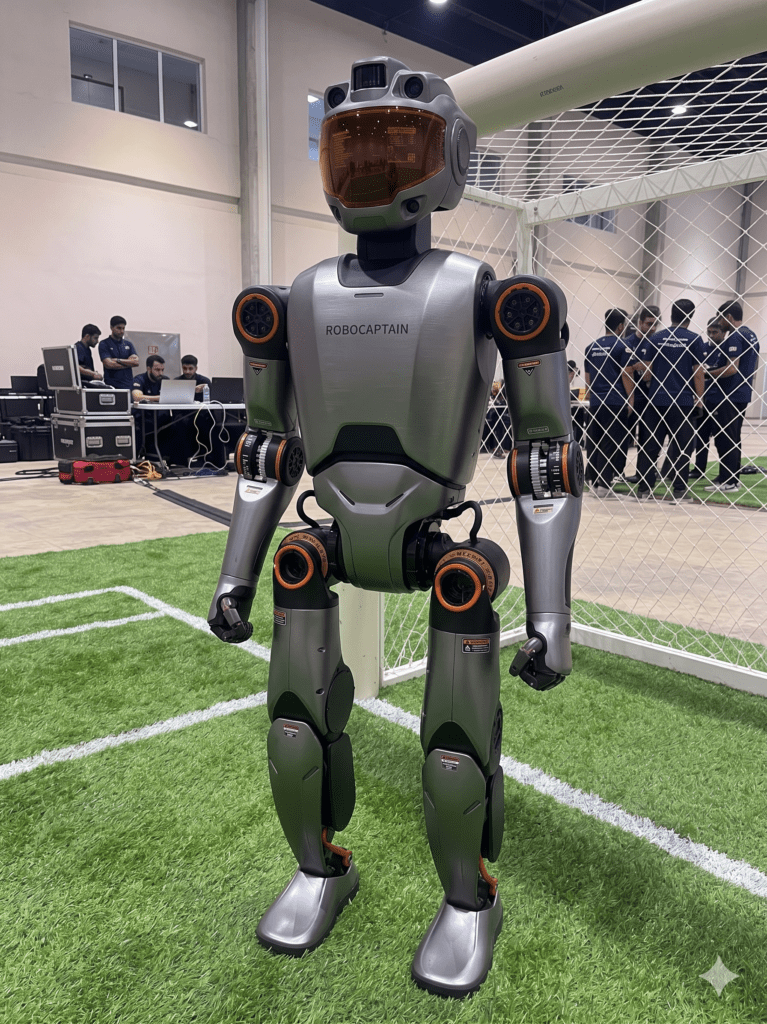
A big success from the previous year: At the RoboCup 2025 in Salvador, Brazil, Boosted HTWK from HTWK Leipzig won the Humanoid League Kid Size. According to heise, the final against TH-MOS ended clearly with 11:0. In the adult size, Tsinghua Hephaestus won.
Table: Humanoid League winners in recent years
JahrKidSize-SiegerAdultSize-Sieger2025Boosted HTWKTsinghua Hephaestus2024CIT BrainsRoMeLa UCLA2023Rhoban FCNimbRo AdultSize2022CIT BrainsNimbRo AdultSize2021StarkitSweaty
Sources: official results lists of the RoboCup Humanoid League. https://humanoid.robocup.org/robocup-2025/schedule-and-results-rc-hl-2025/
The biggest challenges
The first big task is running. People run, stop and turn almost automatically. For a robot, every step is a calculation task. The floor can slip, an opponent can bump, and the robot is on its back.
The second task is seeing. A robot receives camera images and has to recognize from them: Where is the ball? Where is the gate? Who is a teammate and who is an opponent? For you this is natural. It’s tricky for a machine.
The third task is teamwork. A good footballer recognizes space, deceives opponents and plays at the right moment. Robots have to make such decisions using sensors, algorithms and radio connections.
And then comes the fourth task: speed. Professional footballers react quickly. Although robots have become better, they are often slower, more cautious and less creative.
How likely is the game in 2050?
I think an exhibition game against the reigning world champions in 2050 is quite possible. It is much more difficult for a humanoid robot team to actually win. There are still 24 years until 2050. During this time, motors, batteries, cameras and artificial intelligence will get much better. Nevertheless, football is not just arithmetic. It’s about body awareness, surprise, courage and lightning-fast ideas.
My assessment: An official game in 2050 is realistic. A victory for the robots is possible, but not certain – perhaps more of an outside chance.
Conclusion
The RoboCup is more than robot football. It is a huge research laboratory for the future. What is learned there can later help rescue robots, assistance robots or robots in everyday life.
Maybe robots won’t beat the world champion in 2050. But by then they will be much better at seeing, understanding and navigating our world.
FuxFun
Did you know that a German team became robot soccer world champions in 2025? Boosted HTWK from Leipzig won the humanoid KidSize class – and in the final a total of 11 goals were scored for the Leipzig robots.
Source reference
Sources: FIFA, Reuters, RoboCup Federation, RoboCup Humanoid League, Humanoid Soccer League and heise. The official RoboCup result lists and the HSL declaration on the merger of the previous leagues are particularly important.
Book recommendation
You can find out even more about robots and artificial intelligence in the book “Robots & AI” from the SchlauFUX series from Kosmos Verlag – for young explorers aged 8 and over.
https://amzn.to/4oL1232
I like it:
Similar posts




GIPHY App Key not set. Please check settings