
Glancing at the list of musicals debuting on Broadway this spring might induce a feeling of cozy familiarity. Almost every premiere is based on a beloved movie, TV show, or older piece of theater. But take a closer look, and you’ll see that this particular dose of déjà vu comes with a twist. Among the retellings and revivals are several parodies, from Schmigadoon!’s whimsical journey into a magical town that exists inside the Golden Age of musical theater to Titaníque’s send-up of one of the most popular films of the 1990s (not to mention the entire oeuvre of superstar Céline Dion).
It’s the season of the Broadway spoof. And creating that type of show is an art unto itself.

Tracking the Trend
Historically, musicals created from existing intellectual property have been more common on Broadway, whereas parodies have tended to thrive off-Broadway. (Case in point: the revue Forbidden Broadway, which has been satirizing Broadway shows and performers since 1982.) And yet this season includes two off-Broadway-to-Broadway transfers that fall into the genre of spoof or reimagining—Titaníque and CATS: The Jellicle Ball, a new staging of Andrew Lloyd Webber’s CATS set in the queer ballroom scene—alongside new productions like Schmigadoon!. Why is this type of show resonating right now?
“Familiarity is certainly a factor,” says Dr. Amy S. Osatinski, associate professor of theater history at Oklahoma City University. “When the economic side is precarious, as it is right now and has been since the pandemic, producers don’t like to take as many risks.” Reenvisioning a known piece of theater or other media, whether by spoofing it or by turning a nonmusical into a musical (as with new movies-turned-shows like Beaches and The Lost Boys), can help the familiar feel fresh.
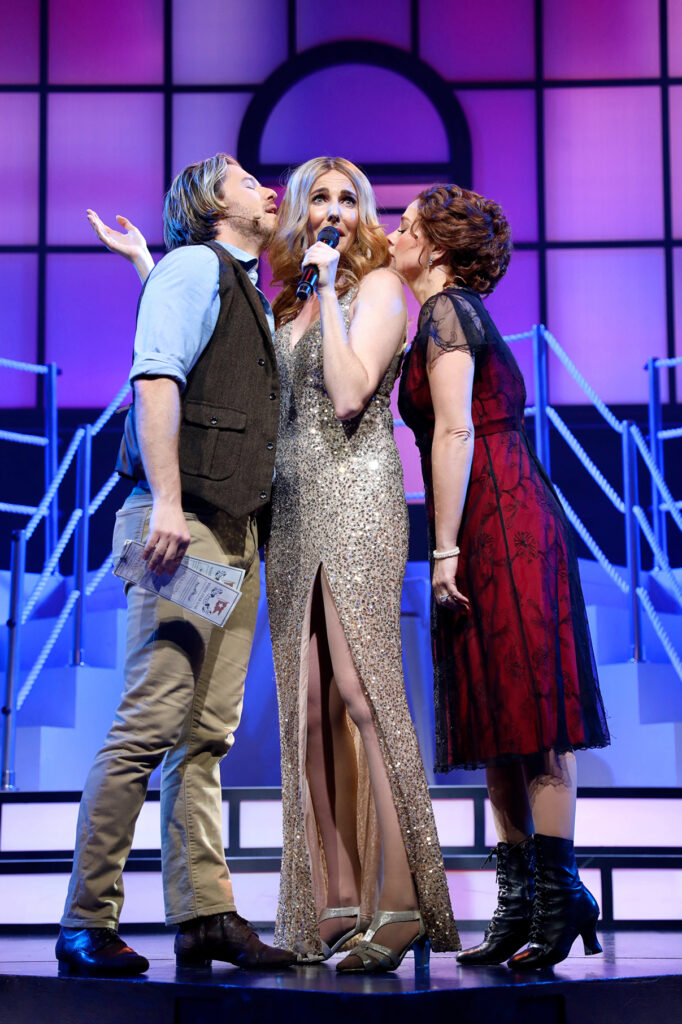
From left: Constantine Rousouli, Marla Mindelle, and Carrie St. Louis in Titaníque off-Broadway. Photo by Chad David Kraus, Courtesy Vivacity Media Group.
But there’s another reason Broadway is leaning toward comedy, specifically. “People need to laugh right now,” says Schmigadoon! director and choreographer Christopher Gattelli, who also choreographed the Apple TV+ show the musical is based on. “When you can put together something that’s an escape, that leaves the audience kind of floating on a cloud afterward, that’s really special.”
“Being in a room with hundreds of other people, experiencing joy and laughter together—it’s a type of medicine,” says Titaníque choreographer Ellenore Scott. “I think that’s why these shows are gaining a fan following.”
The Recipe for Success
Choreographing a parody or homage is a balancing act from day one. Do you start with the chicken or the egg—the source of inspiration or the new material? “For me, it’s always story first,” says Gattelli. “Even in a spoof, you want to get the characters to the other side of a number having learned something or grown or changed. Then you can build in the references to whatever you’re sending up.”
For a show like Schmigadoon!, which winks at a wide array of classic musicals, another tricky aspect of the process can be deciding which bits of choreography and staging to borrow or reference, and when. “It’s like putting it all in a blender,” he says. “Instead of taking a big chunk out of one number, I’m looking for an eight-count or a phrase that will catch people’s eye. It’s swatches and images.”
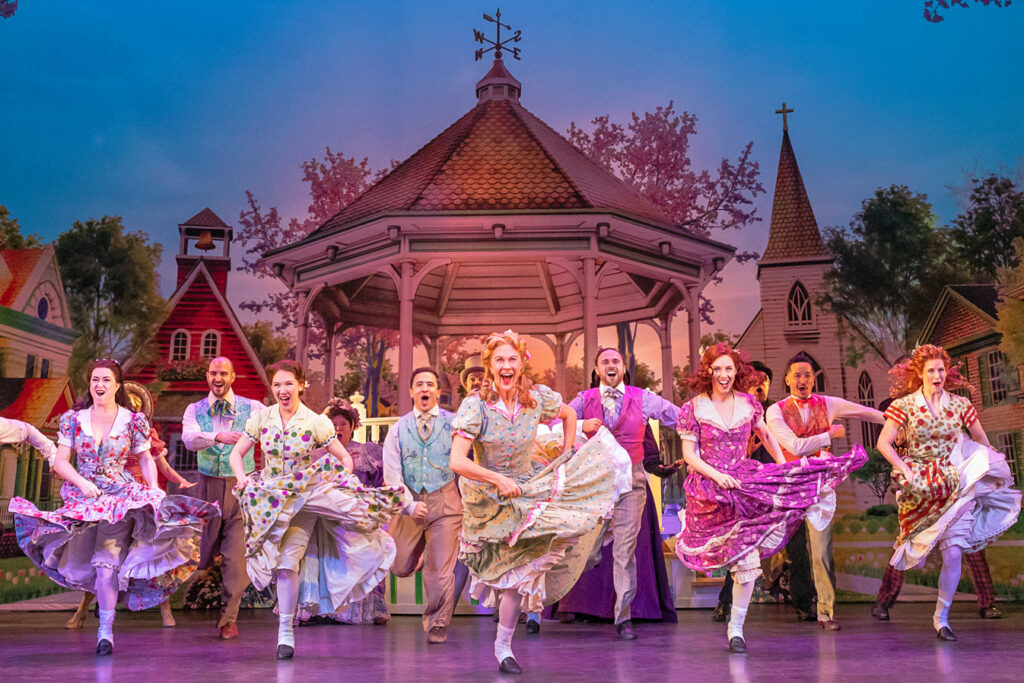 The Washington, DC, cast of Schmigadoon!. Photo by Matthew Murphy and Evan Zimmerman, Courtesy Rubenstein Communications.
Callbacks to iconic choreography and other points of inspiration should ideally be both funny and recognizable. But how recognizable? Deep-cut “Easter eggs” for serious dance/musical theater fans can live alongside visual jokes that will land with a broader audience, Scott explains. “If the Chicago reference to ‘number 17, the Spread Eagle’ flies by you, that’s okay, because something else is going to make you laugh,” she says.
Then there’s the coaching aspect, helping dancers and actors sell potentially silly movements. Scott says moments of onstage ridiculousness actually hit harder when the characters take things seriously. For example, there’s a scene in Titaníque when the actors do “showgirl walks” to show off their costumes. “I’m not making fun of showgirls,” Scott says. “I’m asking these characters to be showgirls—to give face, to shimmy their shoulders, to catch the light.” The humor comes from the juxtaposition.
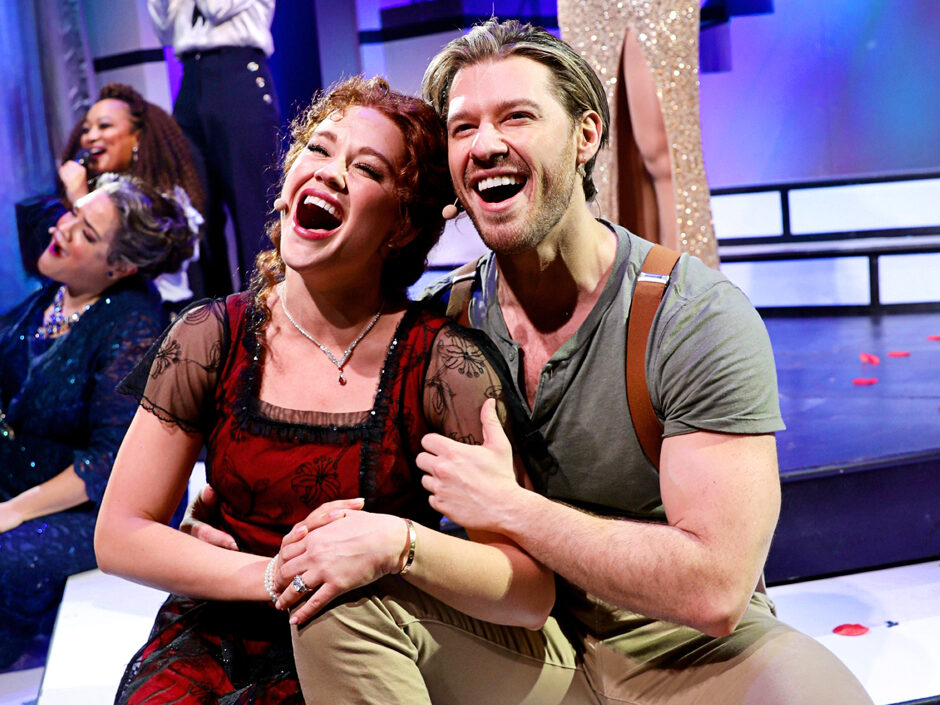 Carrie St. Louis and Constantine Rousouli in Titaníque off-Broadway. Photo by Chad David Kraus, Courtesy Vivacity Media Group.
Why the Movement Matters
Choreography that nods to musical theater history is its own Broadway tradition. “Broadway dance has always had a tendency to quote, to pay homage, to take an existing piece and remix it into something new,” Osatinski says. Even in a non-spoof show, “there’s a lot of fun and joy in a recognizable citation.”
While parodies will of course have callbacks and winking references in their scripts, Gattelli feels that people are even more likely to connect with the song-and-dance elements. “There are these cultural moments that are in our DNA: things like ‘Singin’ in the Rain,’ Gene Kelly dancing with that umbrella,” he says. “When it’s a visual or aural reference—a dance step everyone recognizes, the opening notes to a familiar song—you start to get the warm fuzzies right away. It’s a level beyond dialogue.”
The Role of Research
To effectively spoof something, it helps to know it inside and out—which allows for a reinterpretation that’s respectful as well as funny. While choreographing the TV version of “Schmigadoon!,” “I steeped myself in the work of Agnes de Mille, Michael Kidd, Jerome Robbins,” says Christopher Gattelli, who is also directing and choreographing the new stage production. “I watched number after number from these classic, Rodgers and Hammerstein–era shows.”
Not only was he collecting iconic moves and sequences, but he was also creating a library of videos to share with his dancers. “I’d show them the original: This is what it’s supposed to look like,” Gattelli explains. “We’re going to take care of these choreographers’ steps. We’re honoring their genius.”
A Long Tradition
“Historically, theatrical parodies go back to the ancient Greeks,” says Dr. Amy S. Osatinski, associate professor of theater history at Oklahoma City University. She cites Aristophanes’ comedic play The Frogs, which includes a boxing match between two tragic playwrights, Aeschylus and Euripides. More than two thousand years later, in 1700s England, ballad operas changed the lyrics of popular tunes to humorously comment on contemporary events.
Many musicals that are now considered theatrical canon premiered as parodies. “Bye Bye Birdie was a spoof of Elvis; Grease was a spoof of the 1950s; How to Succeed in Business… was a spoof of corporate culture,” says Osatinski. These classic comedies have come full circle to provide source material (alongside “serious” shows) for modern parody artists.
The newest crop of spoof musicals lands in a category Osatinski calls “meta-modernism,” one aspect of which is self-referential theater that sends up what came before, but from a place of genuine affection. “It’s not cynical or jaded. It’s an oscillation between sincere and snarky,” she says. “It’s poking fun at something, but doing so with an earnest love for it.”
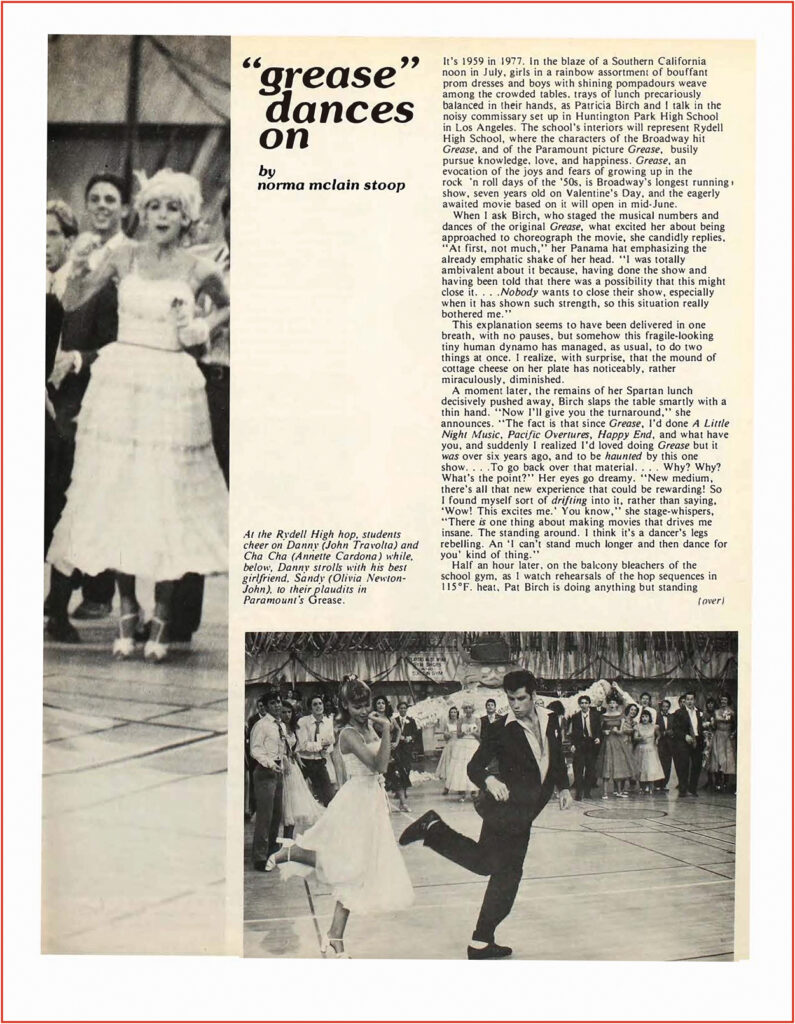 From the DM Archives.
 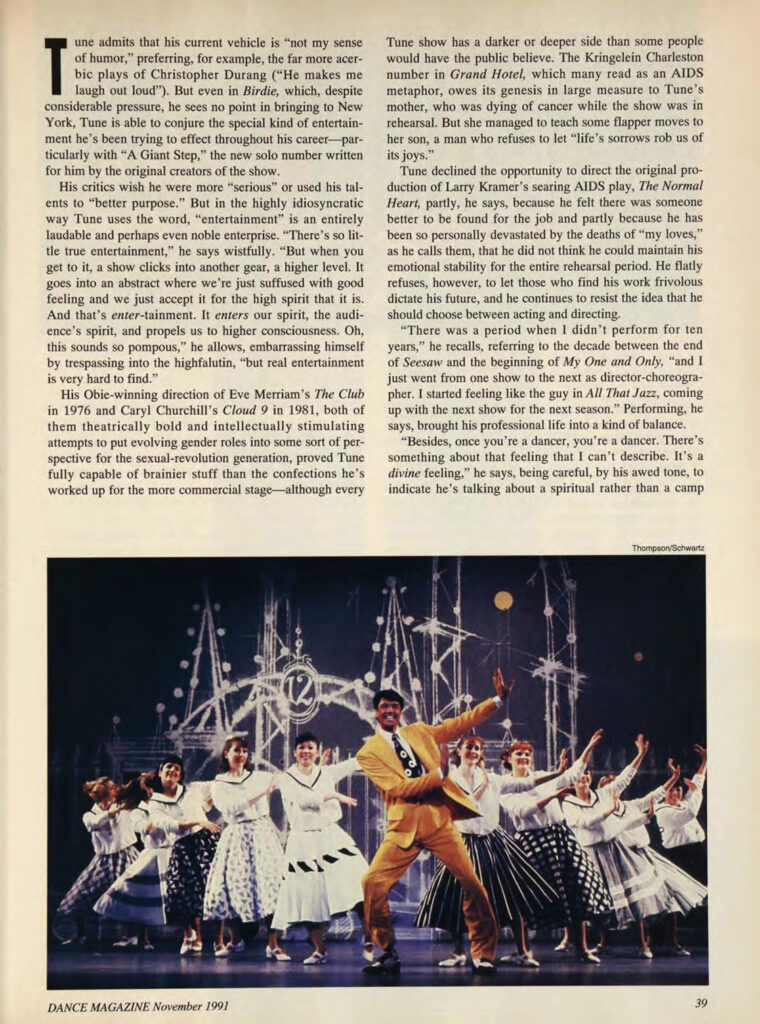 From the DM Archives.
 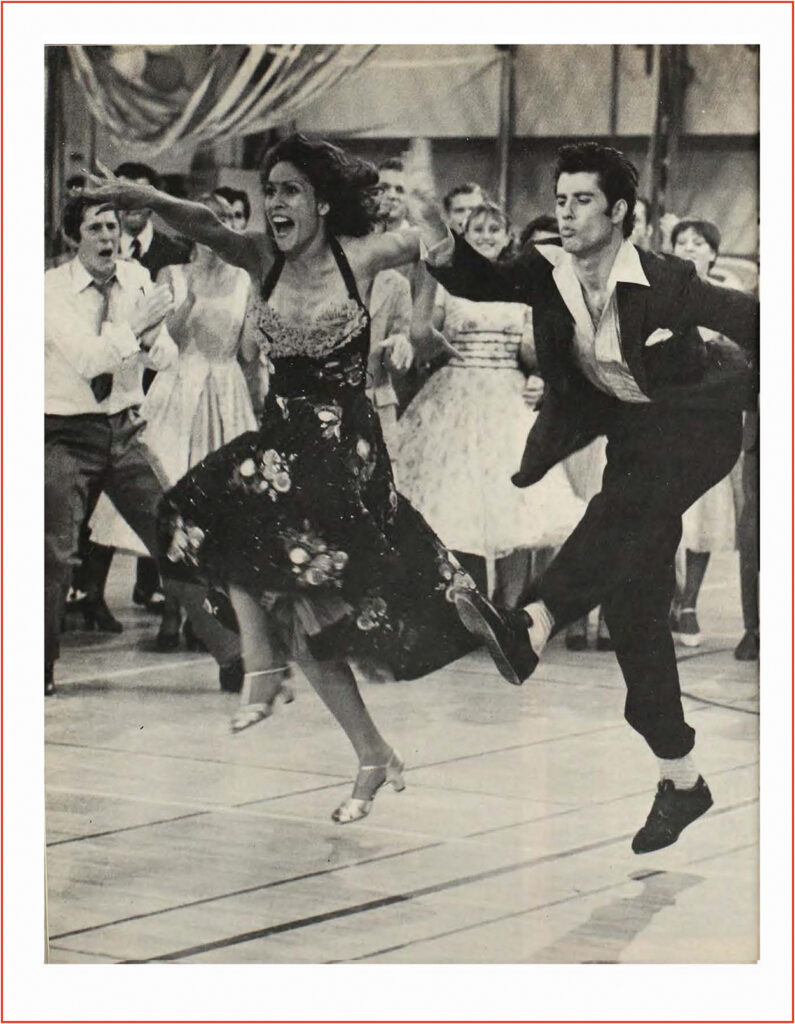 From the DM Archives.
The post The Parodies and Spoofs Dominating Broadway’s New Musicals This Spring appeared first on Dance Magazine.




GIPHY App Key not set. Please check settings